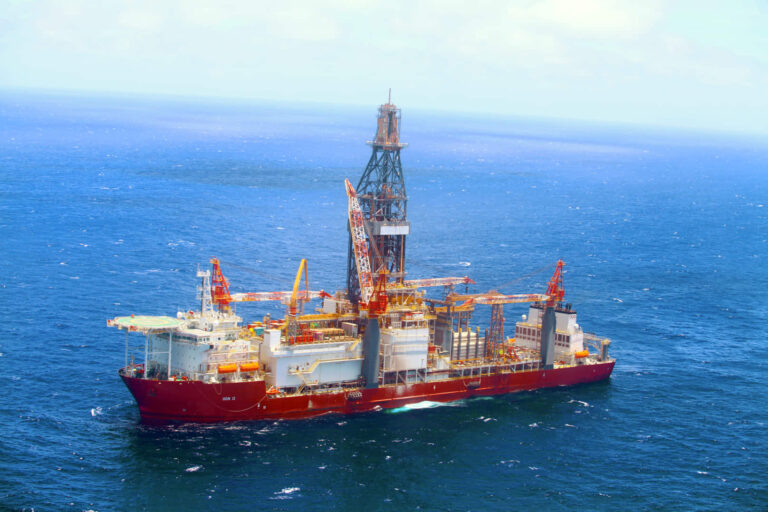
Brazil’s national oil company Petrobras is expected to push back the award of up to four drillship contracts for the Buzios field, with the timeline extending into 2026, according to individuals familiar with the process. The shift comes as the market tracks Brazil’s output amid signs of a growing global crude surplus.
Sources indicated that Petrobras had initially targeted completion of the contracting process this year but is delaying in part to deepen its understanding of the reservoir, which could improve well placement. Another source said the company has allowed contractors to revise their proposals through the end of 2025.
The pace of the drilling campaign will influence how quickly Petroleo Brasileiro SA reaches peak production at Buzios—one of the main contributors to Brazil’s output growth in 2025 and a factor in the current oversupply. The field recently exceeded 1 MMbpd and may approach 2 MMbpd toward the end of the decade.
Global demand for deepwater-capable rigs has softened as operators concentrate on the most productive acreage, weighed by cost pressures, weakening oil prices and competition from lower-cost onshore developments. Earlier this month, the International Energy Agency reported that global crude supply is set to exceed demand by just over 4 million bpd next year.
Petrobras confirmed that the tendering process for Buzios drilling units remains active but did not indicate when awards will be issued. The company said it regularly reassesses requirements for critical resources, including offshore drilling units, to optimise project planning.
The potential contracts represent an important revenue stream for drillship operators and suppliers of subsea equipment. Analysts and contractors noted that Petrobras has continued to seek cost reductions from vendors in response to lower oil prices.
Offshore driller Valaris Ltd. recently stated that Brazil could account for nearly one-third of global drillship demand through 2029, citing a temporary downturn in activity and an anticipated market recovery in 2026, which could place upward pressure on future rig rates.
Source: Bloomberg