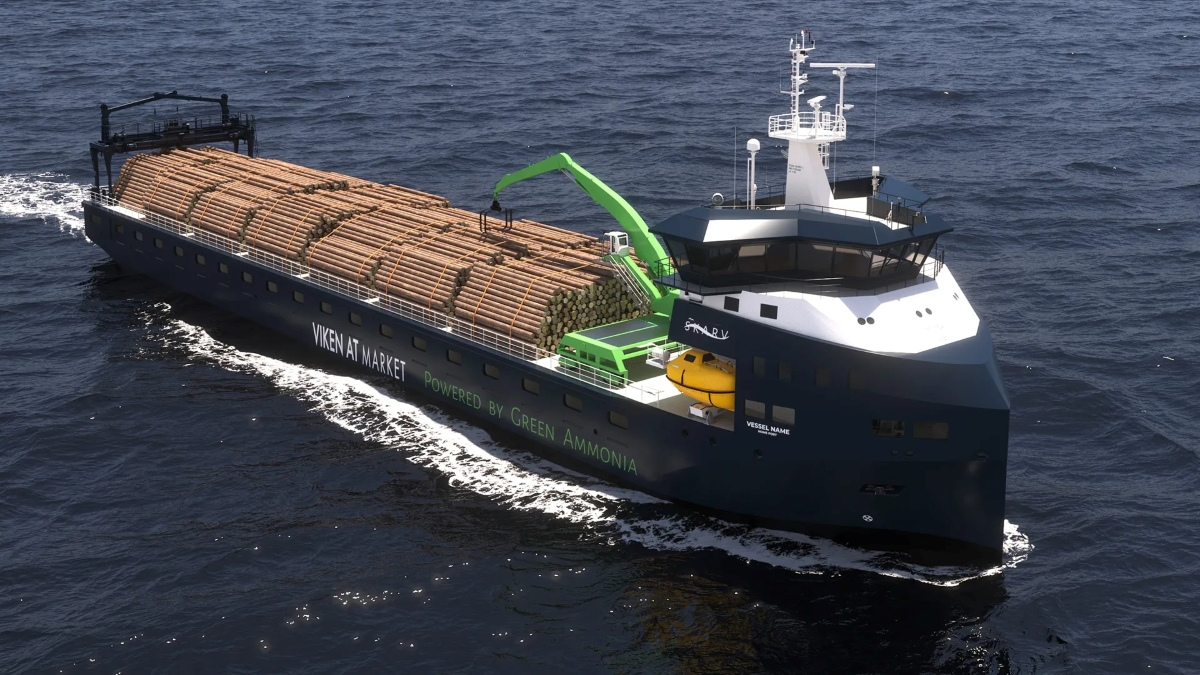
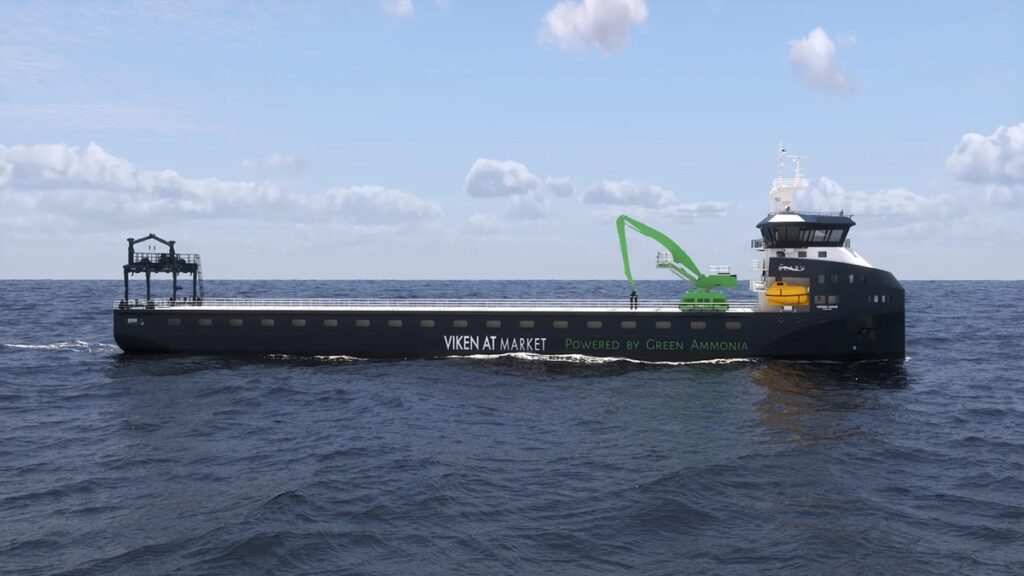
A new timber carrier ordered by Viken AT Market will be the first newbuild equipped with the Wärtsilä 25 Ammonia engine, a milestone for efforts to cut emissions from Norwegian coastal shipping when the vessel enters service in 2027. The project represents an early commercial application of ammonia as a marine fuel in regular cargo operations.
The self-unloading ship is designed with a deadweight of 7,800 dwt and an overall length of 108 m (354 ft). Construction will take place at China’s Huanghao shipyard, with delivery planned for summer 2027. The vessel design has been developed in Bergen by Skarv Shipping, while Grieg Shipbrokers has helped finalise both the technical concept and the contract with the yard. Under a time-charter agreement, Arriva Shipping is scheduled to employ the vessel and will run its commercial operation on behalf of Viken AT Market, a Norwegian timber exporter.
Under its supply contract, Wärtsilä will deliver the Wärtsilä 25 Ammonia main engine together with a full ammonia-fuel package. This includes the AmmoniaPac fuel gas supply system, the Wärtsilä Ammonia Release Mitigation System (WARMS), and an SCR (selective catalytic reduction) unit configured for ammonia operation. Delivery of the equipment is due to start in Q4 2026. According to Roger Holm, President of Wärtsilä Marine and Executive Vice President at Wärtsilä Corporation, the engine and overall solution are the outcome of long-term development work and trials aimed at cutting emissions from shipping.
Skarv Shipping reports that the vessel has been optimised to sail efficiently at lower speeds, supporting the business case even though ammonia is more expensive than traditional marine fuels. An ammonia tank with a 160-cubic capacity, used together with marine gas oil (MGO) as pilot fuel, is intended to cover round voyages of up to 14 days between Norway and ports on the European continent.
At the moment, Viken AT Market moves about 1 million tonnes of Norwegian timber to European markets each year, largely using diesel-powered ships running on conventional fuel. From summer 2027, a share of this volume is to be carried on the new vessel, which will use a combination of electricity and ammonia, supporting ongoing efforts to reduce carbon emissions from these shipments.