Governments from nine countries bordering the North Sea have joined forces with offshore wind developers and grid companies in a new investment pact. The initiative is intended to attract about $1.17 trillion, roughly €1 trillion, of capital into offshore wind projects and to accelerate the rollout of capacity in European waters. It also supports a collective objective to reach 300 GW of offshore wind capacity across the wider North Sea region by 2050.
The agreement was sealed at the North Sea Summit in Hamburg, where political leaders and energy ministers from Germany, France, Denmark, and Belgium, as well as Ireland, Luxembourg, Norway, the Netherlands, and the United Kingdom, met to discuss regional cooperation. At the summit, they signed the Offshore Wind Investment Pact for the North Seas, alongside a declaration by Heads of State, a second declaration from Energy Ministers, and an Industry Declaration backed by more than 100 companies active along the offshore wind value chain.
Under the pact, participating governments commit to providing investors with more predictable planning and investment conditions and to reducing risks associated with new projects. Measures include making two-way CfDs the primary support tool in offshore wind auctions and easing rules to allow generators to sign long-term PPA contracts directly with large corporate electricity buyers.
The countries also agreed to phase in new projects more cohesively. Together, they are aiming to add 15 GW of capacity each year in the North Sea area from 2031 to 2040. A stable stream of projects is intended to underpin investment in manufacturing facilities, port upgrades, and specialised construction and service vessels.
In exchange for this policy framework, Europe’s offshore wind sector has set its own commitments. Industry players aim to reduce offshore wind costs by 30% by 2040, taking 2025 as the reference year, helped by larger project pipelines, lower financing costs, and further industrialisation. They expect the pact to support around $1.17 trillion (roughly €1 trillion) in economic activity, create some 91,000 additional jobs, and drive about $11.1 billion (€9.5 billion) in investment across the offshore wind value chain.
Grid operators are also part of the pact. They will map cost-effective offshore wind projects across national borders in the North Sea and intend to define 20 GW of economically viable cross-border capacity by 2027 for deployment in the 2030s. Their work will cover hybrid offshore wind schemes and interconnection projects, and will include agreed principles for cost sharing.
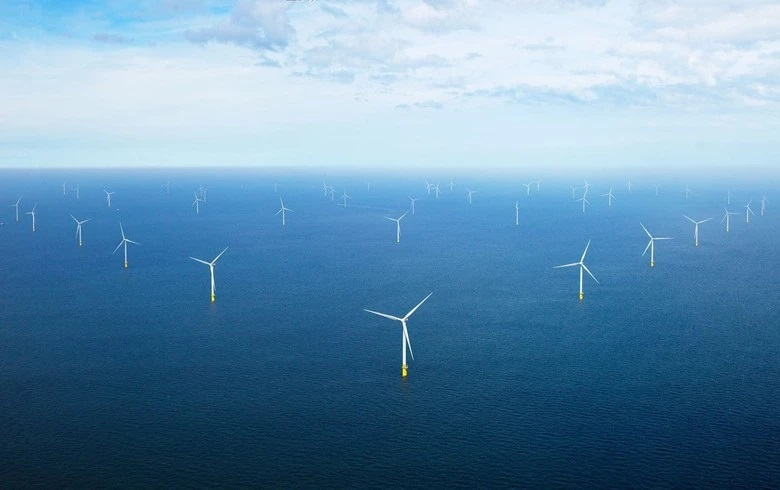
At present, Europe operates 37 GW of installed offshore capacity spread across 13 countries, with more than 6,000 turbines in service. In recent years, project roll-out has slowed as higher financing costs, problems with auction design, and a lack of long-term visibility for supply chains have made it harder to move projects forward. The new pact is explicitly designed to address these challenges.
Malgosia Bartosik, interim CEO of WindEurope, said the agreement shows that Europe is stepping up its commitment to offshore wind. She argued that closer cooperation between governments on project build-out can help draw in about $1.17 trillion, around €1 trillion, of investment over the coming decade, while supporting secure, domestically produced, and affordable energy and sending a clear signal to those who question Europe’s ambition.