Search
Close this search box

Neoliner Origin Completes First Commercial Loading, Marking Milestone in Wind-Propelled Shipping

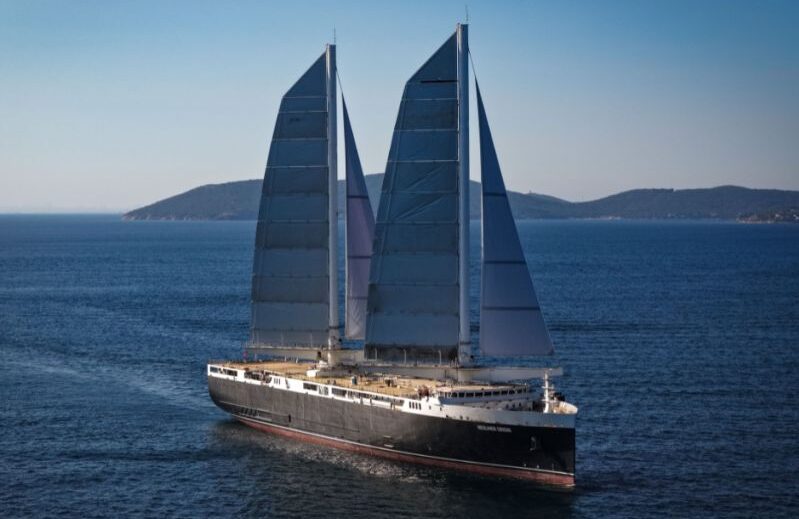
Neoliner Origin has completed its first commercial loading, marking a major step forward for wind-powered maritime transport.
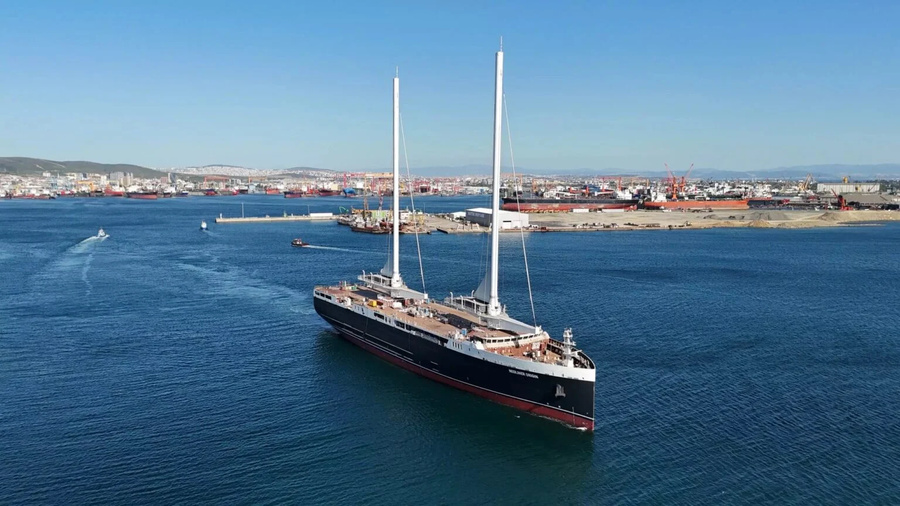
Wind-powered cargo vessel Neoliner Origin during her first commercial loading in Marseille
Neoliner Origin achieves her first commercial loading, a milestone for the future of wind-propelled shipping. (Image courtesy of NEOLINE)

SHARE ARTICLE

Marseille, France — October 2025 — The Neoliner Origin, a wind-powered cargo vessel developed by NEOLINE, has completed its first commercial loading operation, signaling a major step forward for the global transition to low-carbon maritime transport.

The vessel departed from RMK Marine shipyard in Turkey and made a strategic stopover in Bastia, Corsica, where 315 cars from client Filpar were loaded before being unloaded in Marseille the following day.

Built over a two-year period, the Neoliner Origin spans 136 meters in length and is equipped with two 76-meter carbon composite masts supporting 3,000 square meters of rigid sails. This innovative configuration enables the ship to significantly reduce fuel consumption and greenhouse gas emissions while maintaining efficient transatlantic operations.

Designed as a Ro-Ro (Roll-on/Roll-off) vessel, the Neoliner Origin offers a carrying capacity of 6,300 tons, accommodating up to 321 vehicles or the equivalent of 265 twenty-foot containers.

Following her successful first loading, Neoline plans to launch regular monthly service routes connecting Saint-Nazaire, France, with Baltimore, Halifax, and St. Pierre & Miquelon, further demonstrating the commercial viability of wind-propelled cargo shipping.

The completion of this first voyage marks a pivotal moment for the shipping industry’s decarbonization journey, proving that modern logistics can indeed harness the power of the wind once again.
Editorial Note:
This article was prepared with the assistance of AI tools to enhance clarity and efficiency.
All information has been reviewed and verified by the HMT News editor.
Freedom Cruise Line International has revived its £12 billion Freedom Ship plan, a nuclear-powered floating city designed to accommodate 80,000 people at sea.
Black carbon emissions from ships operating in Arctic waters continued to increase as vessel traffic expanded and northern routes gained attention, raising questions over whether current regulatory timelines are keeping pace with environmental change.
Seatrium and ABS signed an MOU to support maritime and offshore energy innovation, regulatory readiness, decarbonization, and emerging technology verification.

Subscribe to HMT WEEKLY

Receive HMT WEEKLY in your mailbox.

Heavy Marine Transport News, Delivered Daily — Stay informed on shipping, offshore, and global logistics.

SECTION

INFORMATION

CONTACT

For general inquiries and to contact us,
please email: info@hmt-news.com