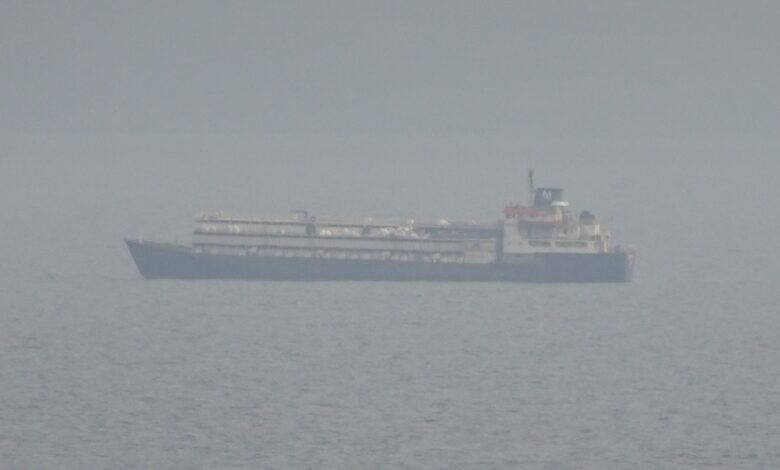
The 52-year-old livestock carrier Spiridon II has remained at anchor off Bandırma, Türkiye, after Turkish authorities refused to permit the unloading of cattle due to irregularities in ear-tag documentation. The vessel left Montevideo on 19 September with 2,900 heifers—some reported as potentially pregnant—and now carries about 2,853 cattle and 20 crewmembers. Animal-welfare groups have described the situation as a humanitarian and animal-welfare crisis.
According to information from the shipowner and welfare organisations, at least 48 animals have died during the voyage. Feed and water supplies on board are reported to be critically low. Footage from the Animal Welfare Foundation (AWF) and Animal Save Movement Turkey appears to show carcasses stored in large bags on deck. On 9 November, authorities allowed the ship to enter port briefly to load additional fodder, after which it was ordered back to anchor offshore.
AWF, Animal Advocacy and Food Transition, and Animals International have appealed to Turkish authorities to permit immediate unloading of the surviving animals. Veterinarians supporting the appeals, including Dr Maria Boada Saña and Dr Lynn Simpson, stated that the cattle are exhausted and dehydrated after more than 53–54 days at sea, noting that supplies on board are likely depleted after the unexpectedly prolonged journey.
Spiridon II is a former Russian general cargo ship converted to livestock transport in 2011. Since 2009, it has been detained nine times, and port-state inspections since 2019 have recorded more than 150 deficiencies, including issues related to working conditions, pollution prevention, navigation safety, fire-safety equipment and structural condition. Recent inspections identified deficiencies in Piraeus in August 2024, and in Beirut in October 2024 and July 2025.
The vessel, registered under the flag of Togo—a flag listed on the Paris MoU blacklist—had previously transported livestock between European ports and destinations in North Africa and the Eastern Mediterranean with approval from the EU Directorate-General for Health and Food Safety until at least mid-2024. Reports indicate that discussions have included the possibility of redirecting the shipment to Ukraine, though the situation remains unresolved.