Korean shipyards are increasingly looking to U.S. Navy ship MRO as a new earnings pillar as competition intensifies in commercial newbuilding. To gain access to this business, more domestic yards are working to obtain MSRA (Master Ship-Repair Agreement) status from the U.S. Navy, which gives them entry to higher-complexity naval maintenance projects and eases part of the documentation burden for certain jobs.
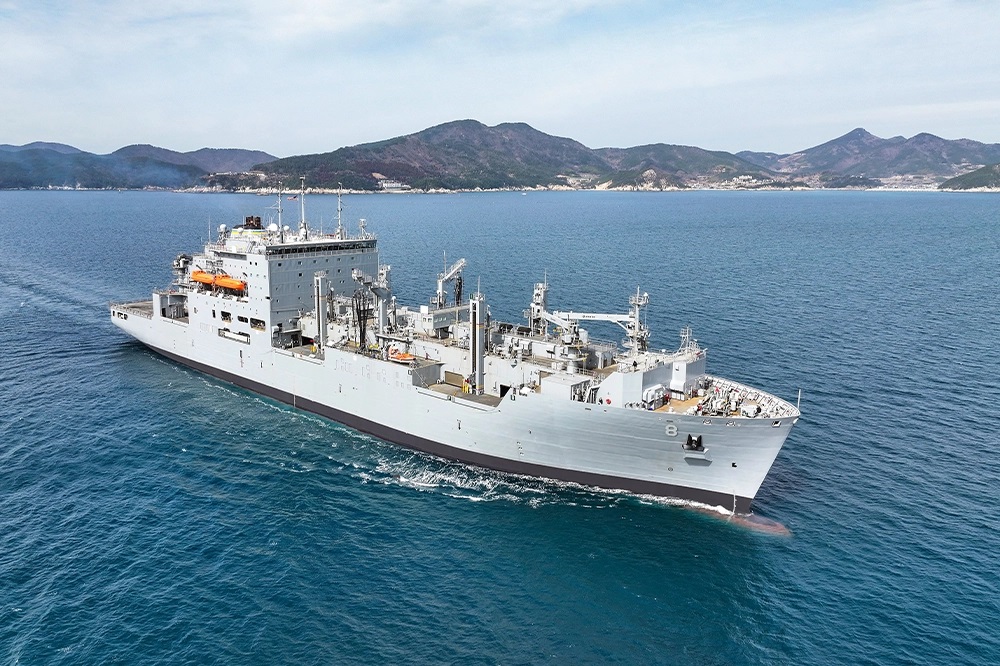
An MSRA is a U.S. Navy approval that recognises a yard’s capability to handle maintenance on key fleet units. Yards that secure the agreement can participate in MRO programmes for priority naval assets, including front-line warship and frigate classes, and they are exempt from some of the documentation normally required when carrying out MRO on logistics support vessels.
U.S. Navy guidance sets clear conditions for MSRA-qualified shipyards. A builder must be able to carry out more than 55% of all maintenance tasks using its own facilities and workforce. In addition, it must either own, or have exclusive guaranteed access to, a pier suited to the work, and it is required to lease a dry dock or equivalent repair dock that has been certified by the Naval Sea Systems Command (NAVSEA).
The approval process itself takes time. From the point at which application materials and other documentation are submitted to the Naval Supply Systems Command (NAVSUP), completing an MSRA typically requires around eight to twelve months. Applicants must provide detailed information on the shipyard’s profile and security, technical capabilities and manpower structure, MRO track record, step-by-step repair procedures, and available facilities and equipment. U.S. authorities then visit the yard for an on-site review before making a final decision on approval.
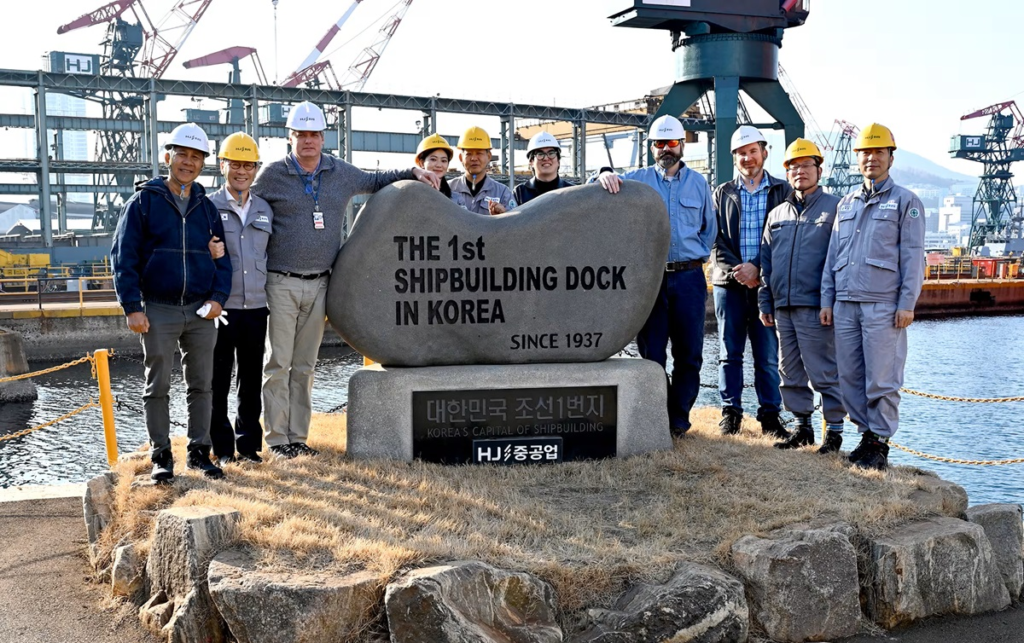
Against this backdrop, HJ Shipbuilding & Construction has recently moved closer to U.S. Navy work. Industry sources said on the 18th that the mid-sized builder had been named by the U.S. Navy as a candidate to sign an MSRA, with the agreement set to run from the 23rd until 22 January 2031. According to HJ Shipbuilding & Construction, the selection was supported by strong results in a port-security audit conducted on the 5th at its Yeongdo shipyard in Busan by specialists from the Naval Criminal Investigative Service.
Other mid-tier Korean yards are also working towards MSRA qualification. K Shipbuilding Co., Ltd. on the 1st formed a dedicated team to oversee future-technology strategy and the associated MSRA paperwork. Daehan Shipbuilding is examining whether to proceed with its own MSRA initiative, while offshore plant specialist SK oceanplant has already submitted documents to the U.S. Navy and is now in the final phase of the process.
Larger builders have also moved into the U.S. Navy repair space. HD Hyundai Heavy Industries and Hanwha Ocean both obtained MSRA status in July 2024, and Samsung Heavy Industries has recently begun preparing to seek an agreement.
Korean yards are focusing on MSRA-linked MRO opportunities because U.S. Navy ship maintenance has emerged as an important new growth driver. Small and mid-sized shipyards in particular are turning towards repair and maintenance work as they struggle to compete in newbuilding against Chinese competitors that are submitting low-priced bids.
An official from the shipbuilding industry said Chinese shipyards are winning newbuilding orders at prices more than 20% lower, which makes competition difficult and erodes profitability. The official added that Korean players are therefore shifting their attention to the MRO market, which is seen as a way to secure stable revenue over a longer period.