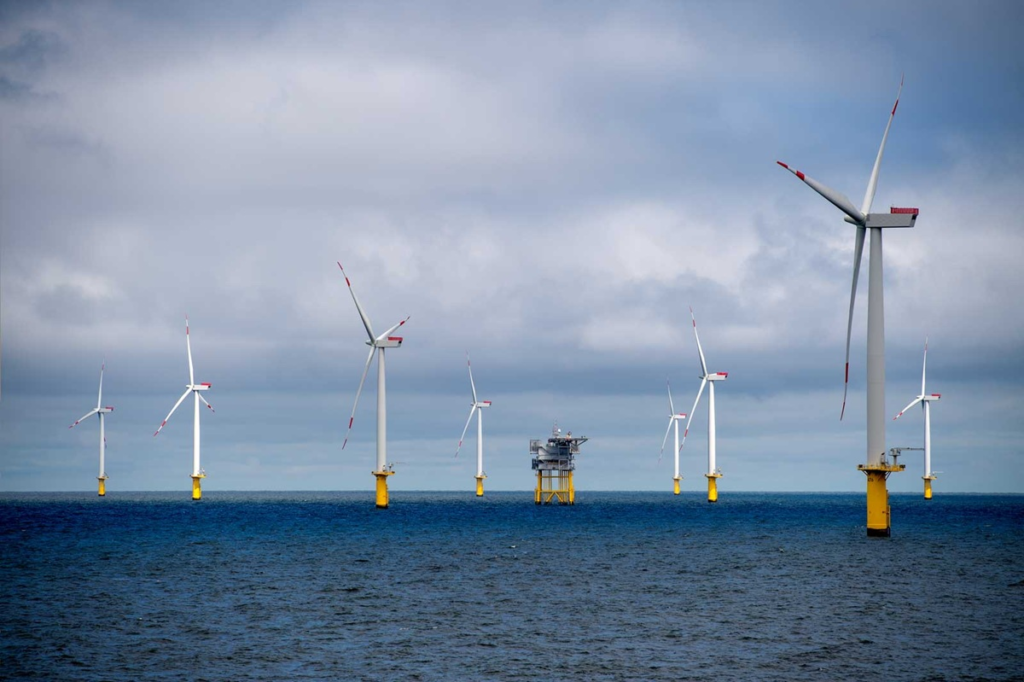
South Korea’s offshore wind programme is facing fresh disruptions, with projects in Jeju and Ulsan halted or paused and a separate scheme in Boryeong slowed by military objections.
Jeju’s Chuja offshore wind initiative has stopped after Korea Midland Power withdrew following a feasibility review, ending the latest attempt to advance a 2.37-gigawatt development off Chuja Island. The plan targeted completion by 2035 with an estimated investment of KRW 24 trillion. The source states the withdrawal occurred “on the 10th”.
Industry sources attributed the setback to conditions set by Jeju Province. Developers were required to sell all electricity generated within Jeju and to pay KRW 130 billion each year for 20 years into a resident benefit-sharing fund. Sources said the fixed-payment structure was difficult to justify given profit uncertainty. Equinor, which initially examined the opportunity, also exited after reviewing the requirements.
Jeju Energy Corporation chief Choi Myung-dong said the project framework is being reconsidered, including splitting the offshore area into two or three zones and shifting benefit-sharing from a fixed annual payment to a revenue-based percentage model.
In Ulsan, the special purpose company BadaEnergy—involving Corio, TotalEnergies, and SK Ecoplant—has started liquidation procedures and plans to return its power generation permit. The company had pursued the 1.5-gigawatt Ghost Whale offshore wind complex with a stated total cost of KRW 12 trillion. An industry source said material price increases drove costs to roughly double, while difficulties securing overseas investment contributed to the decision.
Another Ulsan-area development, Equinor’s Firefly offshore wind project, which aimed to build a 750-megawatt wind farm by 2030, is described as temporarily suspended.
Separately, Boryeong City in South Chungcheong Province is seeing delays on its offshore wind plan due to opposition from the military, as the proposed area lies near a missile test range. Boryeong’s plan calls for a 1.3-gigawatt complex near Hodo, Nokdo and Oeyeondo by 2030 with an investment of KRW 9 trillion.