
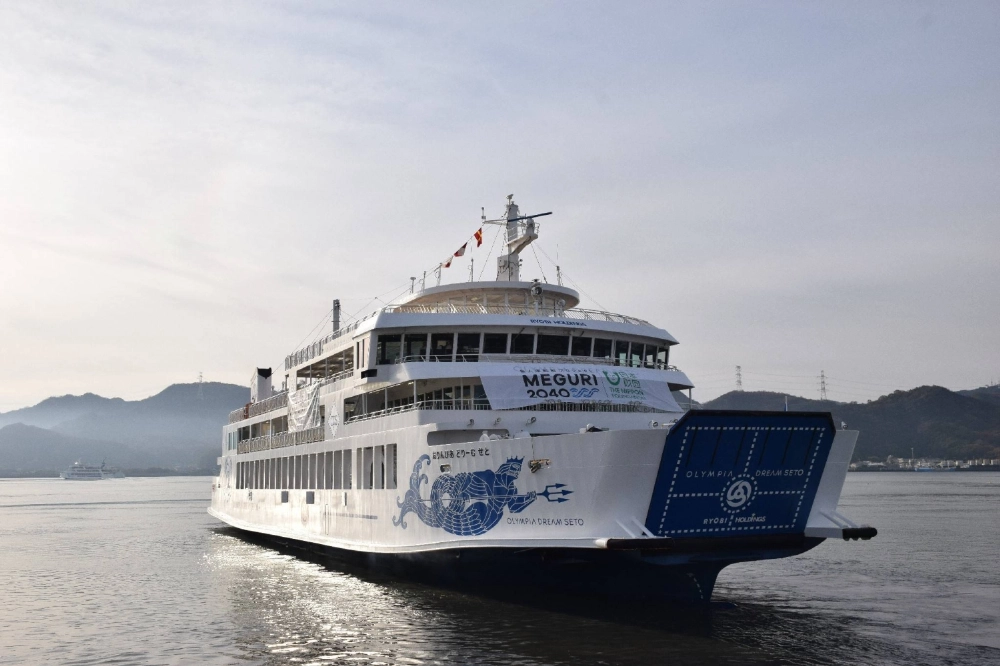
Japan is preparing to place its first licensed ferry equipped with an autonomous navigation system into regular operation, with the Olympia Dream Seto scheduled to begin sailing on 11 December under a government-backed programme.
On Wednesday, the Nippon Foundation staged a demonstration of the autonomous system and described the event as a significant step toward the practical deployment of the technology. Reporters noted that the 60 m (197-foot) Ro-Pax ferry left the pier smoothly, proceeded through calm waters, and altered course automatically after detecting another vessel ahead.
Built in 2019 and measuring nearly 1,000 gross tons, the Olympia Dream Seto is the first vessel to complete the autonomous conversion process under the MEGURI 2040 project, which started in 2020. The ferry operates an approximately 70-minute route across the Seto Inland Sea between Shin-Okayama Port and Tonosho Port on Shodoshima, serving small islands off Japan’s coast. It can carry up to 500 passengers and either 60 cars or 10 buses, operates at about 13 knots, and typically sails with a crew of 10.
The MEGURI 2040 project is intended to bring autonomous navigation into commercial service. The foundation behind the programme points to two key aims: reducing accident risk linked to human mistakes and easing the worsening seafarer shortage. The project has set a target for autonomous or unmanned operations to account for 50 percent of domestic ship traffic by 2040.
As part of the initiative, trial voyages took place from January to March 2022. Tests included operations in Tokyo Bay, designated as a congested trial area because of its heavy vessel movements, and a long-distance autonomous passage of about 750 km (more than 460 miles).
Regulatory work has advanced alongside the technical trials. Japan’s Ministry of Land, Infrastructure, Transport and Tourism set up a study group in 2024 to examine safety standards and inspection schemes for autonomous shipping. The group’s findings, released in June 2025, provided the framework that allowed the Olympia Dream Seto to proceed with formal approval.
Before installation, the ferry’s autonomous systems were required to undergo a dedicated inspection. That assessment was completed in July, after which the vessel obtained an “early-stage autonomous ship” designation. A second verification phase concluded on 5 December, during which the ferry demonstrated autonomous operations, and it subsequently received its certificate.
The ferry’s operator, Ryobi Ferry Company, says it will introduce the system in line with the crew’s growing familiarity with the new operating procedures.
The MEGURI 2040 project is also progressing with additional vessels. The 749 gross ton containership Mikage, which took part in the initial demonstrations, is being prepared for certification. The Ro-Ro vessel Hokuren Maru No. 2 is being readied for demonstration voyages in waters where it may face both dense fishing traffic and fog. In addition, the newly built domestic containership Genbu has been constructed with future unmanned operations in mind. These further demonstration activities are scheduled for completion by April 2026.
