Jan De Nul is adding two more vessels for subsea cable burial as offshore renewable projects advance and power links between offshore wind farms and onshore grids expand.
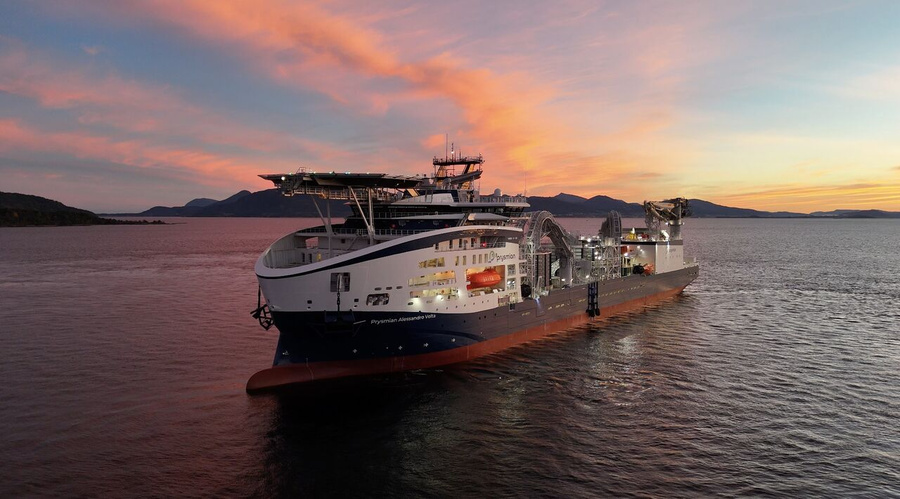
The latest step lifts the company’s cable installation and protection pipeline to four vessels under construction, with a fifth unit being converted. The programme follows earlier orders for the cable-laying vessels Fleeming Jenkin and William Thomson, as well as the rock installation vessel George W. Goethals.
According to Wouter Vermeersch, Director Subsea Cables Offshore Energy at Jan De Nul, the company sees continued demand for offshore power infrastructure and is preparing its fleet accordingly. He said cable burial vessels were the next addition needed to support safe placement of energy links in the seabed.
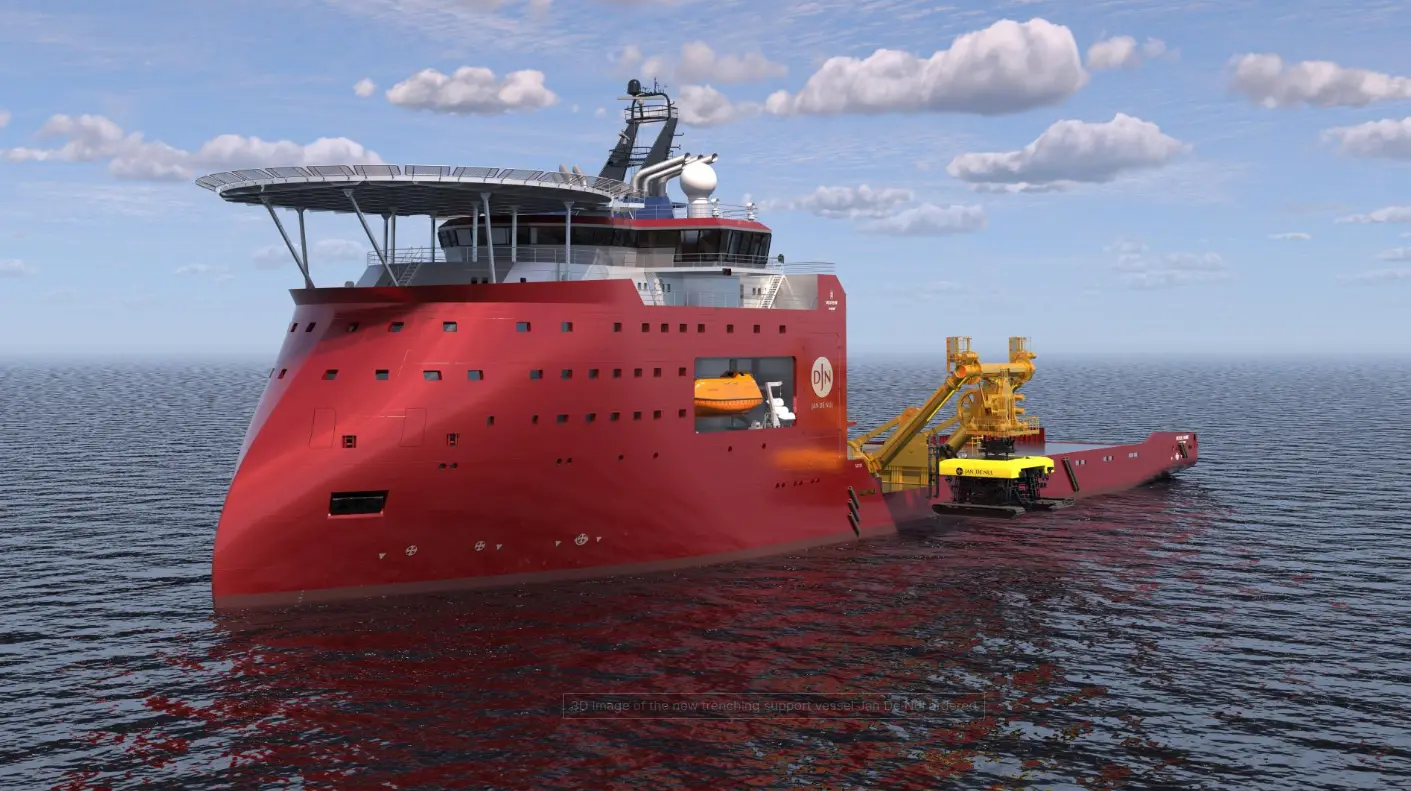
One of the new units is a dedicated trenching support vessel built to bury cables to depths of up to 5 m below the seabed. Based on an Ulstein design, the vessel is being constructed at the CMHI yard in China and will join the company’s offshore renewable energy fleet after delivery.
Its trenching spread will be handled from the vessel and used alongside cable installation work. Placing cables below the seabed helps shield them from risks including anchors, fishing gear and seabed shifts.
The newbuild will also incorporate ULEv technology, which the company said can remove up to 99% of nanoparticles from exhaust gases while cutting other polluting emissions. Its engines will run on biofuel and are prepared for possible future methanol use to lower CO₂ emissions.
Alongside the newbuild, Jan De Nul will convert Henry Darcy into a trenching support vessel. That vessel will receive a subsea robot ordered from Osbit for cable burial work in shallow waters.
Shallow-water sections are often located near shore, where cables approach landing points or tie into coastal grid infrastructure. These parts of a route can be among the more sensitive stretches within an offshore transmission system.
Vermeersch said the investment is significant, although the company did not disclose its value. He added that the fleet expansion shows the offshore construction sector is positioning itself to support further growth in locally generated electricity systems, with subsea power cables linking local and national grids.