
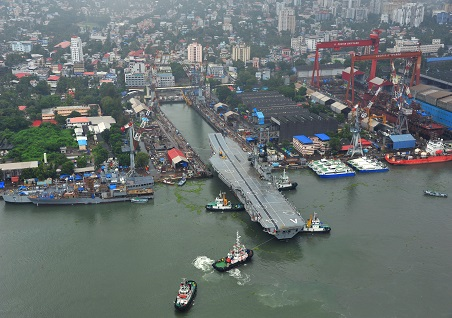
India aims to secure 5% of the global shipbuilding market by 2030. Minister of State for Ports, Shipping and Waterways Shantanu Thakur announced the target at the CII Conference in Goa. He said the plan focuses on developing 10 modern shipyards with support from public-private partnerships and international partners.
Thakur explained that India wants to become a hub for sustainable shipbuilding. The strategy includes policy reforms, investment in digital tools, and closer cooperation between government and industry. “Shipbuilding is a symbol of national strength and self-reliance,” he said, noting that India’s vision is to lead in green growth, the blue economy, and the Atmanirbhar Bharat initiative.
The government plans to launch a national container shipping line by 2030 and to achieve 50% domestic production of container vessels by 2035. Funding for modernization and research is being provided through the Maritime Development Fund.
Inland waterway cargo has grown more than 320% since 2014, lowering logistics costs and cutting emissions. Thakur linked this progress to India’s $2 trillion export target for 2030 and the national net-zero emissions goal for 2070.
Major port modernization projects are under way at Deendayal Port in Kandla, in Kolkata, and in island territories. Logistics upgrades are also planned under the PM Gati Shakti programme. By 2047, the government expects 30% of the national fleet to operate on clean fuels such as LNG, methanol, and hydrogen, supported by green corridors.
A new National Shipbuilding Policy is in preparation. It will streamline regulations, extend tax benefits, provide a 10-year roadmap, and train 50,000 workers by 2030. Research will also focus on autonomous vessels and low-carbon technologies.
Shipbuilding hubs in Gujarat, Kerala, and Andhra Pradesh will be connected to rail and road networks by 2030 to improve supply chains. Under the Sagarmala programme, 150 projects are due for completion this year, including container capacity expansion and green shipping initiatives.
The Confederation of Indian Industry (CII), which hosted the conference, continues to act as a key platform linking industry and government since its establishment in 1895.
