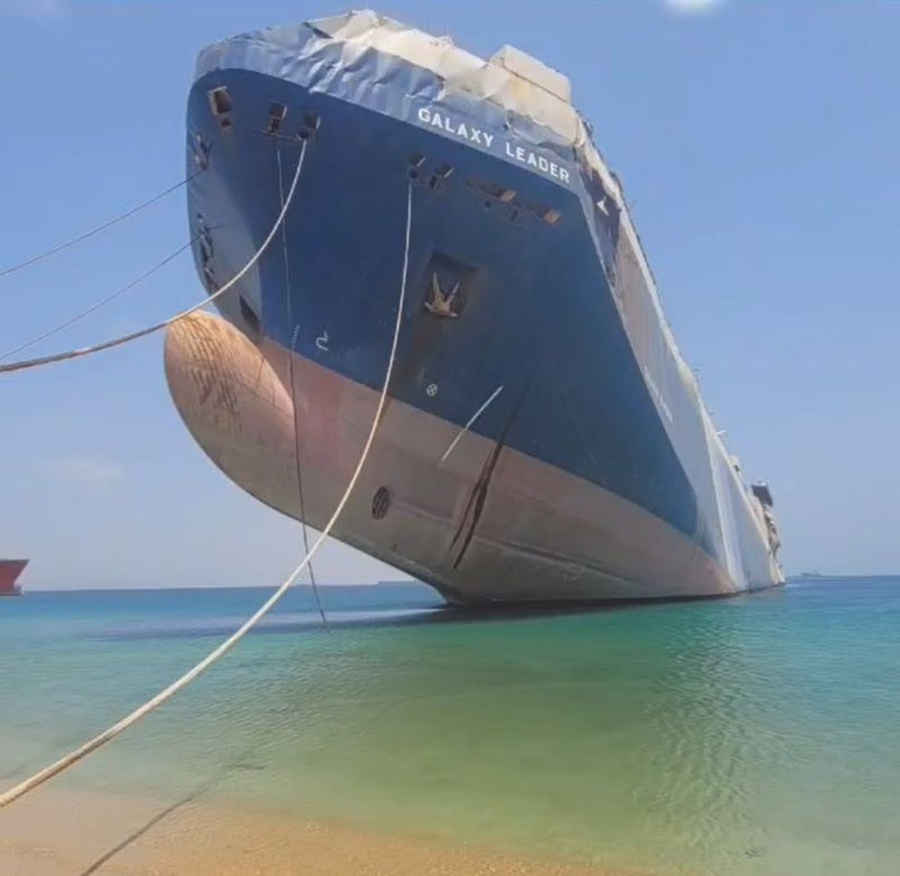
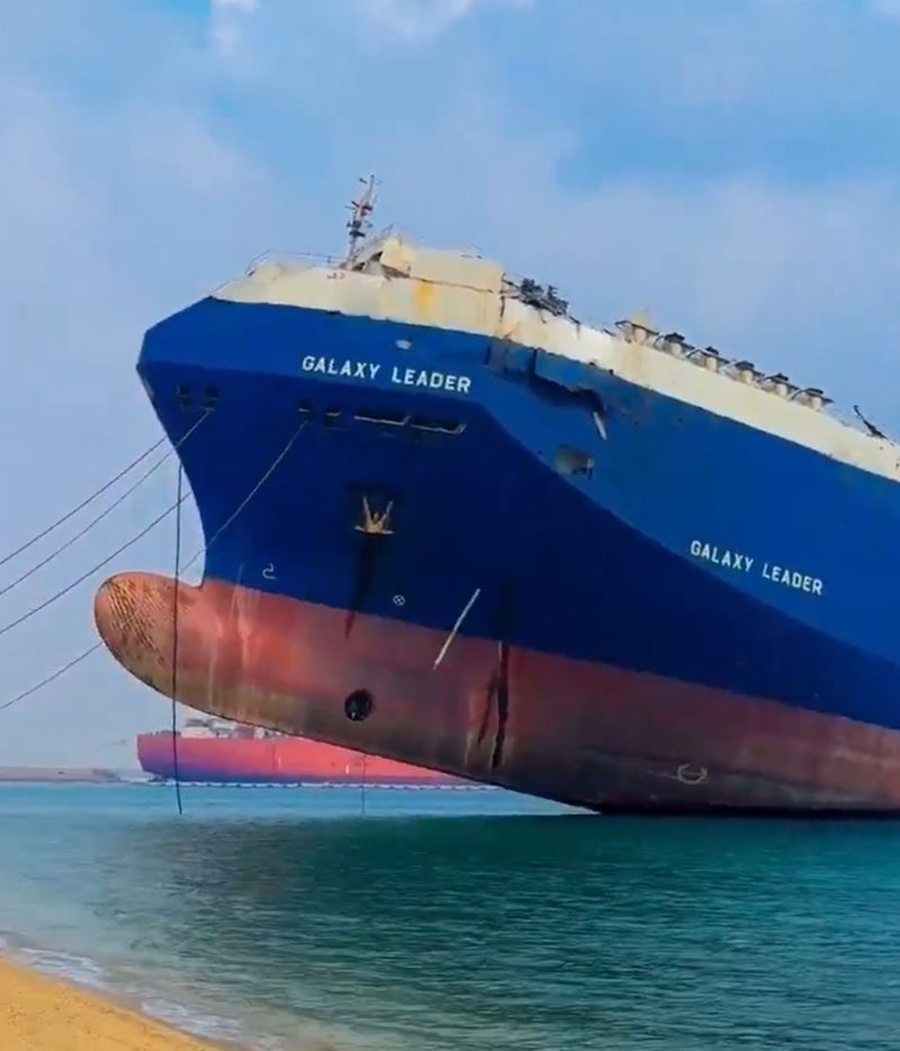
Recent imagery indicates that the car carrier Galaxy Leader is partially submerged off Yemen’s Red Sea coast, with the stern sitting low in the water and the bow lifted at a sharp angle. The photos and video were credited to Sal Mercogliano.
The 5,100 CEU pure car and truck carrier was seized by Houthi forces on 19 November 2023, becoming one of the key early incidents in the Red Sea shipping crisis. The vessel was later held near Yemen, while its multinational crew remained captive for more than a year before being released in January 2025. The ship itself, however, was not returned.
During its detention, Galaxy Leader reportedly became a local attraction, with people approaching and boarding the vessel. Israeli authorities later alleged that the Houthis used the ship as a platform to observe maritime traffic in the Red Sea. The vessel was also reportedly hit during Israeli air operations in July 2025.
If the latest visuals are accurate, removing Galaxy Leader will be highly difficult. Any refloating or dismantling work on a damaged PCTC in a conflict zone would require major salvage assets, funding, and secure access, none of which are readily available in Yemen.
For the maritime sector, the case shows that a hijacked ship may remain a risk even after its crew is released. In a high-tension security environment, a vessel can become a political symbol, a possible military target, an environmental concern, and a long-term wreck-removal challenge.
Galaxy Leader is no longer only a vessel name. It has become one of the clearest symbols of how the Red Sea crisis has changed maritime security risk.