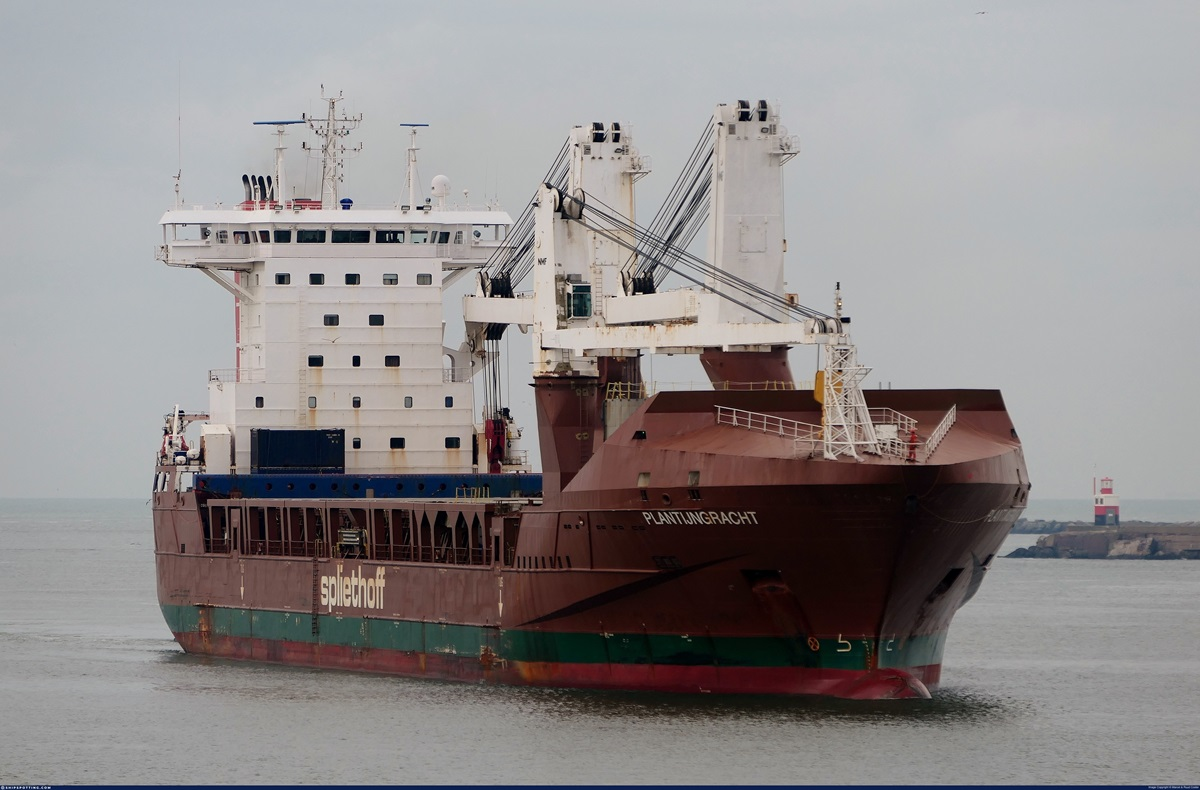
For Operation Deep Freeze 2026, Military Sealift Command has chartered Dutch-flagged heavy-lift vessel Plantijngracht instead of a U.S.-flag ship to conduct the annual resupply of McMurdo Station, reigniting debate over domestic merchant marine capacity.
At Port Hueneme, California, the vessel loaded 305 pieces of cargo between 21 December and 7 January, including a 65 t floating Modular Causeway System that will replace the station’s traditional ice pier. As a self-sustaining breakbulk ship with two 100 t cranes, Plantijngracht can operate in McMurdo’s undeveloped waterfront.
The 8,040 nautical mile voyage includes a call at Christchurch, New Zealand, before Navy Cargo Handling Battalion ONE discharges cargo at McMurdo and assembles the causeway, then backloads waste and ice core samples for laboratories in the United States.
Maritime advocates, including historian Sal Mercogliano, argue that government logistics contracts should prioritise U.S.-flag vessels and have questioned reports that a domestic ship was bypassed because it lay outside a 3,000-mile radius of the loading port.
Military Sealift Command states that an October 2025 solicitation produced no technically acceptable bids, while a November 2025 reissue yielded only one available and technically suitable vessel—a foreign-flag ship operated by a U.S.-based company—leading to a 10 December award just days before loading.
The case underscores how limited heavy-lift availability is shaping U.S. logistics to Antarctica and may influence whether domestic operators invest in the specialised assets required for such niche missions.