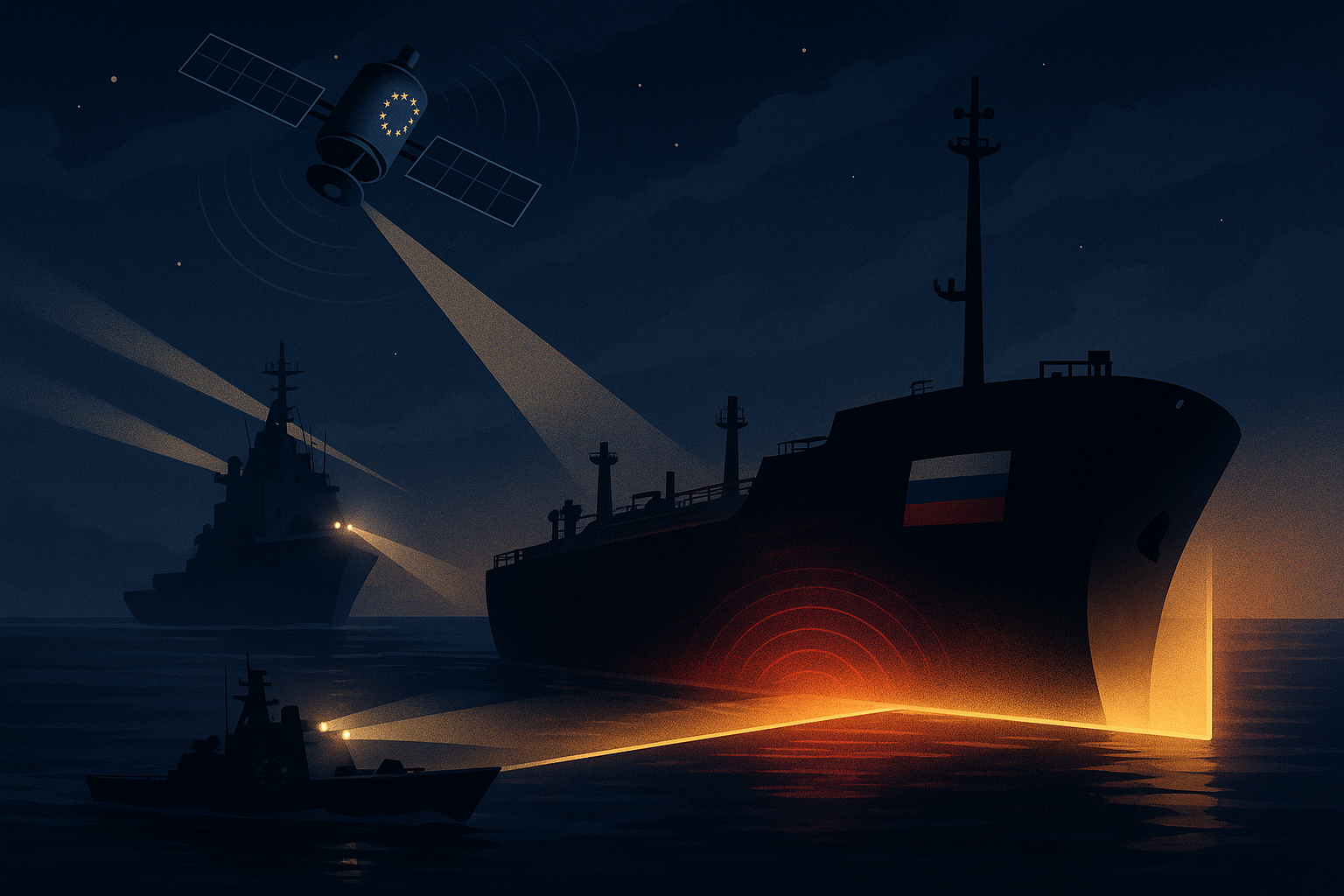
European governments are preparing to roll out a coordinated “policy of obstruction” aimed at disrupting the operations of Russia’s so-called shadow fleet—a network of hundreds of tankers used to bypass sanctions and export oil covertly.
The announcement came from French President Emmanuel Macron following the European Political Community summit in Denmark. He said European chiefs of staff will meet soon under a “Coalition of the Willing” framework, in cooperation with NATO, to draft a joint operational plan. “Every vessel attempting to enter European waters under suspicious conditions will be considered a target for obstruction,” Macron said.
The move follows a series of incidents linked to hybrid warfare tactics, including drone incursions that temporarily halted air traffic at Danish airports. France recently detained two crew members of a tanker suspected to be part of Russia’s shadow fleet, signaling a tougher European stance on sanction evasion at sea.
Macron described the shadow fleet as comprising 800 to 1,000 vessels operating under false flags or shell ownership, generating as much as €30 billion annually—revenue he claimed supports 30–40% of Russia’s wartime economy. By holding or delaying such ships even for short periods, Europe could “severely disrupt” Moscow’s logistics and financial flow, he said.
The Russian government has condemned France’s actions, with President Vladimir Putin accusing Paris of “piratical behavior” after a recent tanker seizure in neutral waters. Macron dismissed the charge, stating that the new measures comply fully with international law and European sanction frameworks.
European Commission President Ursula von der Leyen echoed Macron’s stance, calling for “collective resilience” against hybrid threats ranging from cyberattacks to maritime sabotage. “Europe must protect its seas and its sovereignty,” she said, signaling that coordinated maritime enforcement could soon expand across EU ports.
The initiative marks the most assertive maritime enforcement step yet taken by the EU against Russia’s shadow trade network, underlining Europe’s determination to curb sanction evasion and secure its maritime domain.