Eight people died after a ferry carrying cement sacks overturned in the Mahakam River near Ujoh Halang in Long Iram, East Kalimantan, on 10 November at around 9pm. The vessel had been travelling toward a pier operated by PT Borneo Daya Lestari when it encountered a strong current. A total of 20 passengers were rescued from the 28 people on board.
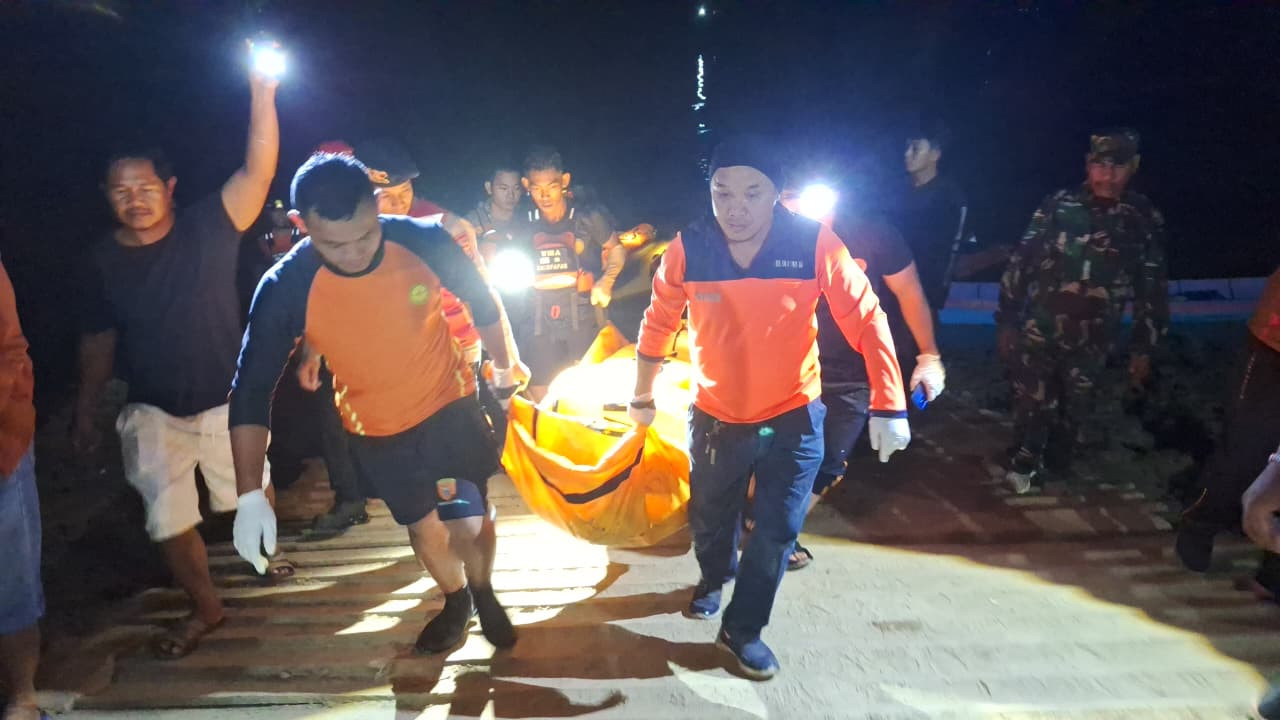
Search teams recovered the first victim, Marselus Bouk, at about 6am on 11 November, roughly 3.69 km downstream from the sinking point. Over the following hours, the bodies of Anci Anwar, Dedy, Yanto, Ilham, Asmanu (Bogel) and Ira were found at various locations ranging from 100 m to 13 km from where the vessel went down. The final victim, Pendy, was located on the evening of 12 November approximately 10.7 km away. All victims were taken to Harapan Insan Sendawar General Hospital.
The West Kutai Disaster Management Agency stated that the ferry was probably overloaded, and that this condition, combined with the strong current, led to the sinking. According to Basarnas Balikpapan, a combined search effort began after the agency received the initial report. Divers attempted several times to reach the hull but had to withdraw because the current made the operation unsafe, especially during night hours. A planned dive around 3pm on 11 November was cancelled due to excessive risk.
With underwater access restricted, the joint rescue team switched to surface and land-based methods, using rubber boats, speedboats, thermal drones, and standard search equipment to sweep the river. Personnel involved in the effort included units from the West Kutai Police, the Mobile Brigade’s 2nd Company, Water Police, BPBD East Kalimantan, BPBD West Kutai, the Transportation Agency, the military, medical workers and local residents.
Ujoh Halang serves as the administrative centre of Long Iram and functions as a transport and logistics point for upstream communities such as Tering, Long Hubung and Long Pahangi. Roads in the area remain limited, and access from Balikpapan requires a 450–500 km overland journey lasting 12 to 15 hours, depending on weather and road conditions. These circumstances made rapid deployment to the accident site difficult.