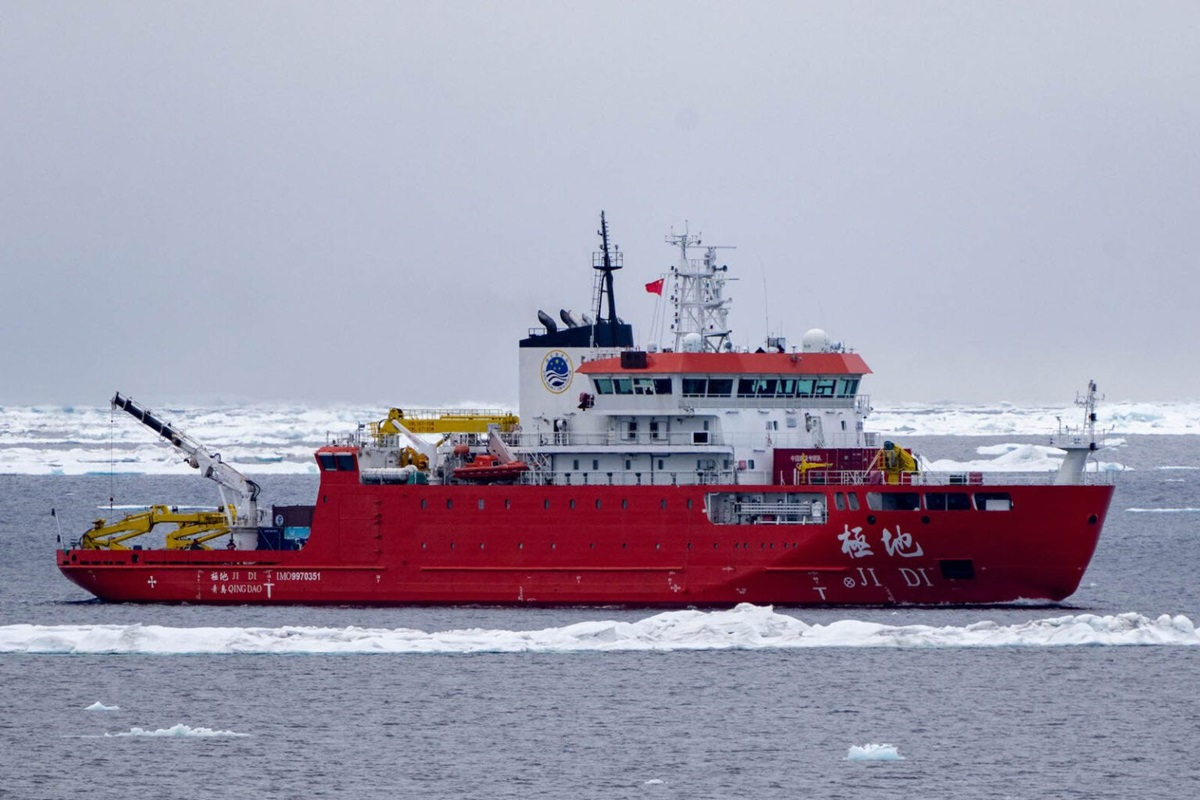
Reuters reported that Chinese research vessels operated across the northwest Pacific last month at the same time the United States intensified military exercises in the region. The findings come from the Pacific Center for Island Security in Guam, which compiled ship-tracking data showing vessels equipped with space and missile monitoring systems and underwater mapping equipment.
The center warned that the pace of militarisation in the northern Pacific receives less attention than it should, arguing that island communities are increasingly exposed as competition between major powers sharpens. Its director, Leland Bettis, said the surge in U.S. multilateral activity highlights a changing security landscape, adding that China’s decision to dispatch research ships to survey undersea areas aligns with broader strategic interests.
According to the center’s Micronesia Security Monitor, unveiled on Thursday, three Chinese research ships, including the Yuanwang 7, were positioned near Kiribati during the past month. Kiribati, located near Hawaii and maintaining close ties with Beijing, oversees an exclusive economic zone of 3.6 million sq km. The country previously voiced concern when a Chinese intercontinental missile test fell close to its waters last year.
Two additional Chinese research vessels were detected east of Guam, near the Federated States of Micronesia and the Marshall Islands, both of which maintain long-standing defence arrangements with Washington.
China’s foreign ministry told Reuters that its marine scientific research follows international law and that its ships obtain required approvals before operating in areas under another nation’s jurisdiction. A spokesperson said the missions are peaceful and aim to advance scientific understanding, adding that Beijing is not the actor attempting to militarise the North Pacific.
Kiribati did not respond to Reuters’ request for comment.
From August to November, the monitor logged nine U.S.-led multinational exercises in waters around Guam. Among them was Exercise Malabar, involving Australia, India, Japan and the United States. Australia’s defence force said the training supports efforts to deter coercive behaviour in the Indo-Pacific.
The United States maintains bases in Guam and the Marshall Islands and holds overflight and maritime access rights in Palau, the Federated States of Micronesia and the Marshall Islands. Bettis noted that although U.S. forces once provided clear deterrence, advances in modern weapons now make these territories more vulnerable.
The monitor’s imagery also illustrates expanded U.S. infrastructure across Micronesia, including upgraded airfields and wharf facilities. The project receives support from commercial donors, the Carnegie Corporation and the Sasakawa Peace Foundation.
Source: Reuters