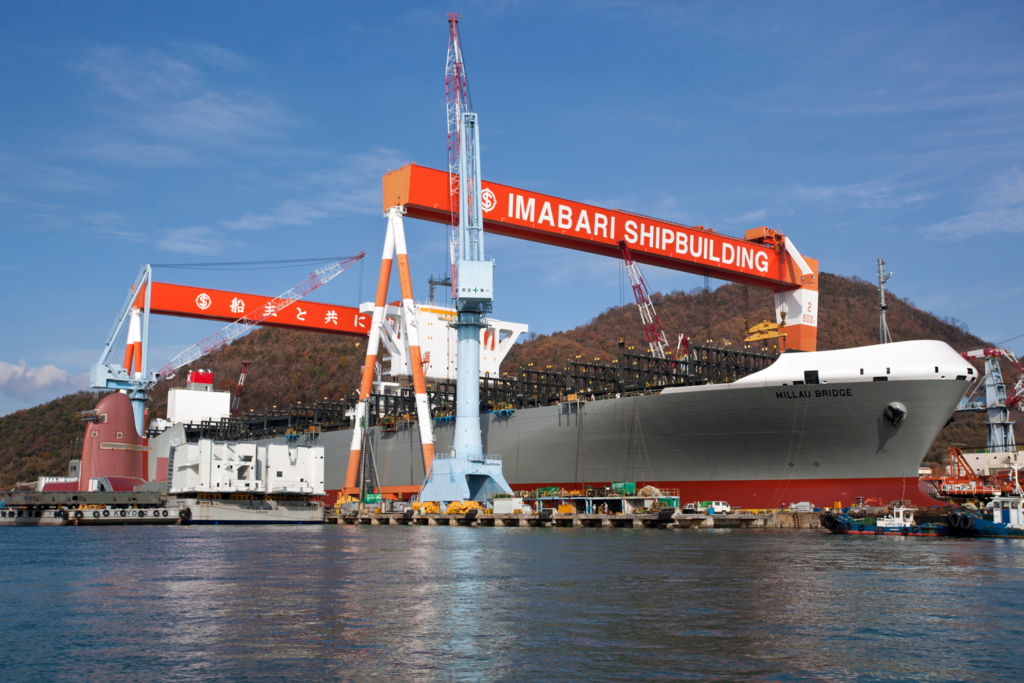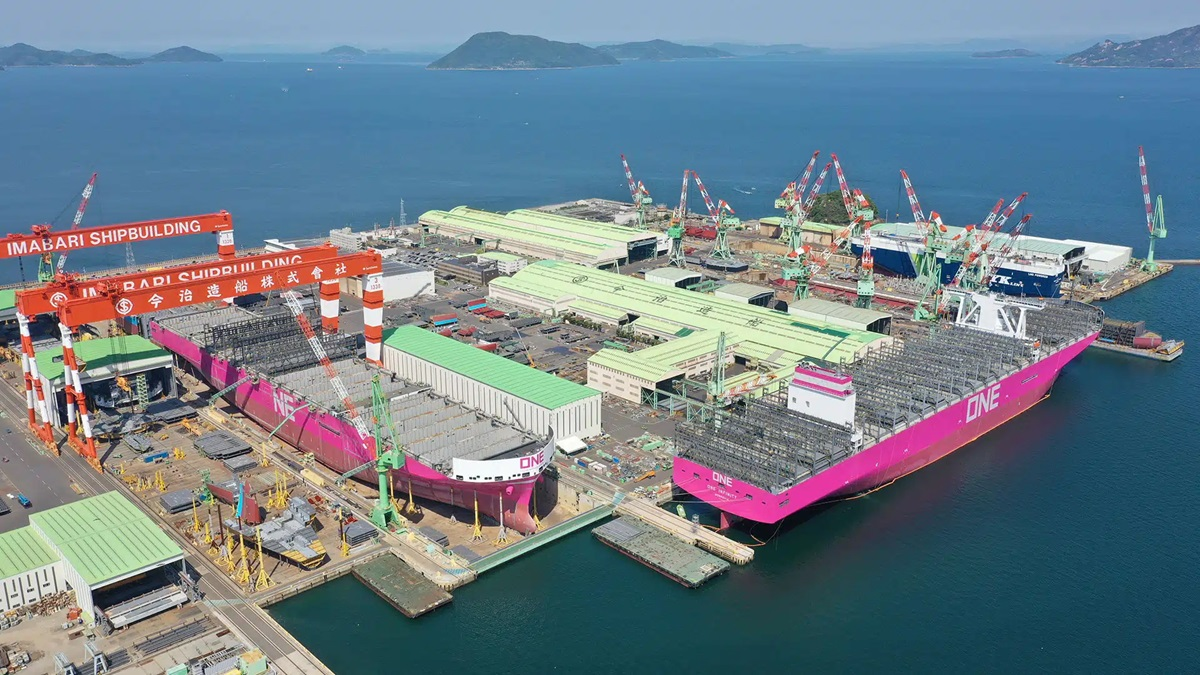
Imabari Shipbuilding’s move to make Japan Marine United (JMU) a subsidiary has cleared a major regulatory hurdle.
On 24 December 2025, Imabari Shipbuilding, JFE Holdings, and IHI Corporation said all antitrust review and approval procedures linked to Imabari Shipbuilding’s purchase of part of JMU’s equity had been completed. The equity transfer will be executed on 5 January 2026, followed by the necessary post-closing steps.
The deal was announced on 26 June 2025. Under that agreement, Imabari Shipbuilding will acquire the 15% JMU stake held by JFE Holdings and the 15% stake held by IHI Corporation. Shareholdings will shift from 30%, 35%, and 35% to 60%, 20%, and 20%, respectively.
Imabari Shipbuilding said the transaction will not affect the business operations or ownership ratio of Nihon Shipyard, the joint venture formed in January 2021 by Imabari Shipbuilding (51%) and JMU (49%) to design and market merchant vessels other than LNG carriers.
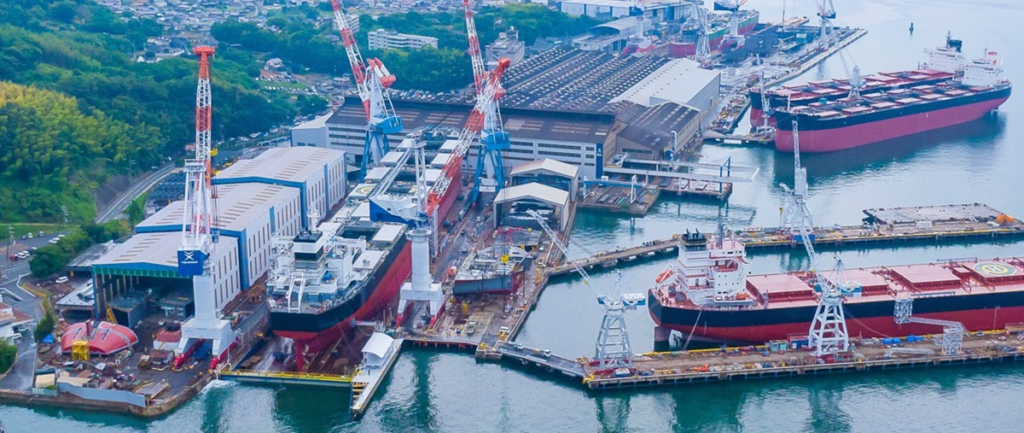
JMU operates seven shipbuilding bases—Ariake, Kure, Tsu, Maizuru, Yokohama Isogo Works, Yokohama Tsurumi Works, and Innoshima—plus a technology R&D center. In 2024, JMU ranked 12th globally at 1.41 million gross tons (GT), while Imabari Shipbuilding ranked 6th at 3.28 million GT. The restructuring lifts combined annual capacity to about 5 million GT, above the 2024 figure cited for fourth-ranked Hanwha Ocean at 3.7 million GT.
Imabari Shipbuilding said integration and restructuring will combine strengths, speed up operational decision-making, and improve competitiveness versus Chinese and South Korean builders. It also highlighted scale benefits in design and procurement, including potential savings through joint purchasing of steel, engines, and other equipment, and said it will leverage JMU’s experience building vessels for the Maritime Self-Defense Force to expand into naval and specialized vessels.
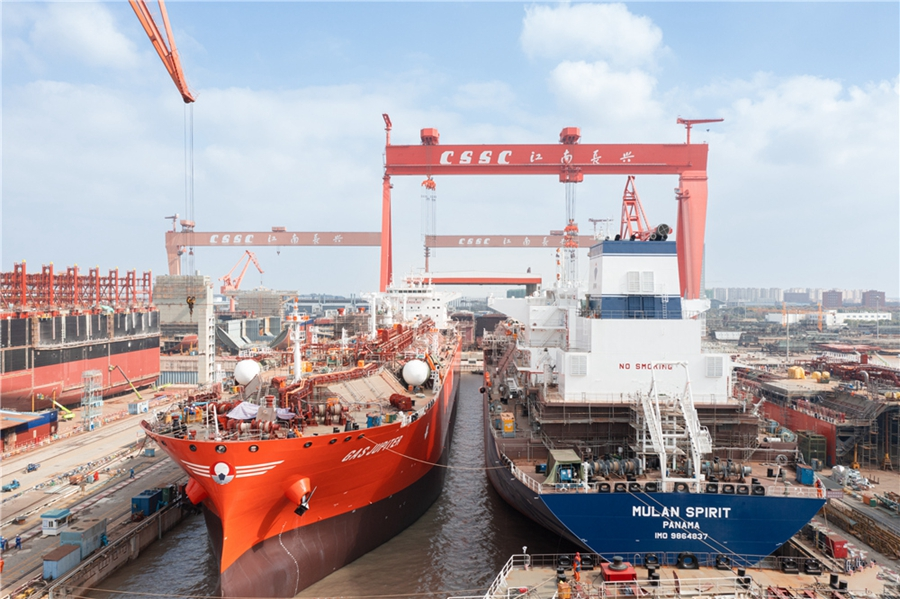
The move comes amid consolidation elsewhere. Several months earlier, China State Shipbuilding Corporation (CSSC) merged its listed units—China CSSC Holdings Limited and China Shipbuilding Industry Company Limited (CSIC)—with major yards under those entities to be integrated into the merged CSSC, including Jiangnan Shipyard, Dalian Shipbuilding Industry Corporation (DSIC), Waigaoqiao Shipbuilding, Wuchang Shipbuilding, Guangzhou Shipyard International, Beihai Shipbuilding, and CSSC Chengxi Shipyard. As of 30 June 2025, CSSC held orders for 333 merchant vessels totaling 26.4911 million deadweight tons, while CSIC held 229 vessels totaling 34.9392 million deadweight tons—together exceeding 560 vessels.
In South Korea, HD Hyundai Heavy Industries and HD Hyundai Mipo said on 1 December that merger procedures had been completed and operations began under “Integrated HD Hyundai Heavy Industries,” with a target of 37 trillion won in operating revenue by 2035. It was also reported that two of HD Hyundai Mipo’s four dry docks will be converted to special-purpose docks.
Recent newbuilding data cited show Japan trailing: in November, Japanese shipyards secured 322,394 CGT across 18 vessels, compared with 2.58 million CGT (100 vessels) for China and 1.97 million CGT (40 vessels) for South Korea. Market shares were given as 50% for China and 38% for South Korea.