Equinor and its partners have made an oil discovery at the Skrugard North Tubåen prospect in the Barents Sea. Preliminary estimates place recoverable resources at 7.6-10.5 million barrels of oil equivalent.
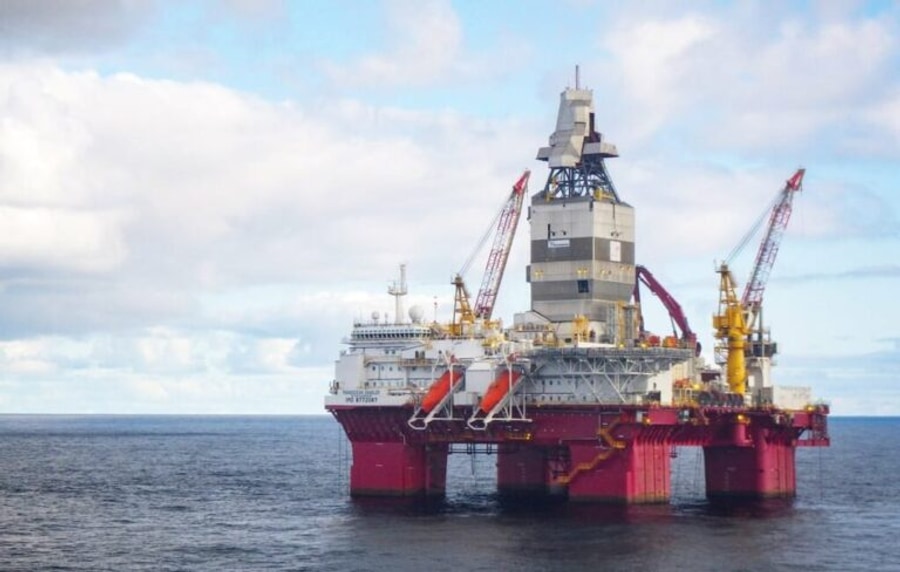
The discovery was confirmed by wildcat well 7220/5-EC-2 H, drilled by the Transocean Enabler rig about 6 km north of discovery well 7220/8-1 on the Johan Castberg field. The well location is approximately 240 km northwest of Hammerfest.
The licence partners are assessing whether the discovery could be connected to the Johan Castberg field, the largest oil development brought on stream in the Norwegian Barents Sea.
Well 7220/5-EC-2 H is the 17th exploration well drilled in production licence 532. The licence was awarded in 2009 during the 20th licensing round on the Norwegian Continental Shelf. Equinor operates the licence with Vår Energi and Petoro as partners.
The exploration targeted petroleum in Lower Jurassic reservoir rocks within the Tubåen Formation. Drilling identified an oil column of around 30 m in sandstone reservoir rocks with a combined thickness of 41 m. Reservoir quality was described as good to very good.
The Tubåen Formation was 68 m thick at the well location. The oil-water contact was encountered at 1,474 m below sea level.
The well reached a vertical depth of 1,521 m below sea level before ending in the Upper Triassic Fruholmen Formation. No formation test was conducted, although data and samples were collected.
Water depth at the site is 361 m. The well will be permanently plugged and abandoned.
The Norwegian Offshore Directorate estimated recoverable resources at between 1.2 million and 1.7 million standard cubic metres of oil equivalent, equal to 7.6-10.5 million barrels of oil equivalent.
The discovery follows an earlier oil find by Equinor at the Polynya Tubåen prospect, also identified as well 7220/7-5.