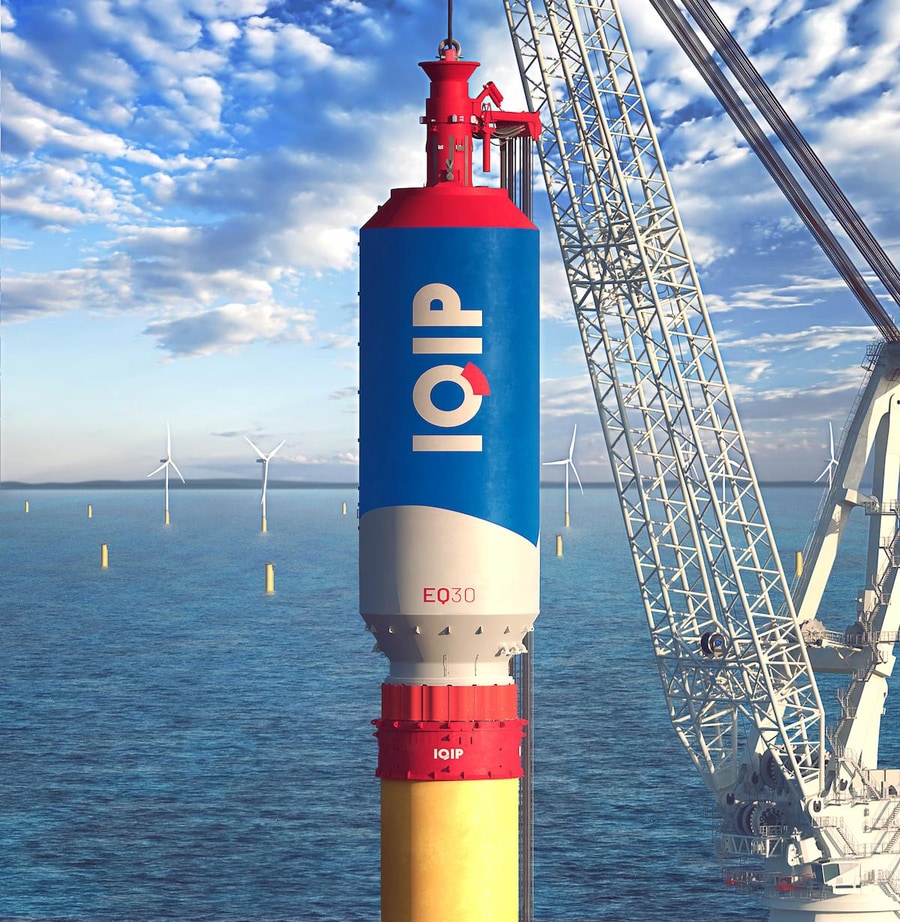
IQIP has introduced a hybrid offshore foundation installation system designed for offshore wind projects operating in hard-rock seabed conditions.
The new “drill-drive-drill” installation method combines drilling and pile-driving in a sequenced process aimed at improving monopile installation where conventional piling techniques may face operational limitations.
According to IQIP, the system creates a stable socket within hard rock before final monopile placement. The company said the approach is intended to reduce structural risks, limit equipment stress and support long-term foundation performance.
The solution combines hydraulic hammers, lifting and upending equipment, subsea stability systems and specialist installation teams under an integrated service model.
IQIP stated that the technology was developed for offshore wind projects in regions with difficult seabed conditions, including rocky Atlantic Ocean locations where strong currents and adverse weather can affect installation activities.
The company added that the integrated installation approach is designed to improve coordination between offshore construction phases, reduce operational delays and support project execution during limited weather windows.
The launch follows IQIP’s recent announcement that it is preparing for the first full-scale offshore installation of its EQ-Piling technology at the Dreekant offshore wind farm site in Germany in cooperation with EnBW and Vattenfall.
According to the project partners, the offshore demonstration is intended to verify whether EQ-Piling can satisfy industry requirements for installation accuracy, operational efficiency and underwater noise limitations while providing a scalable alternative to conventional piling methods.
Following the demonstration campaign, the technology is expected to be ready for deployment in upcoming offshore wind projects.