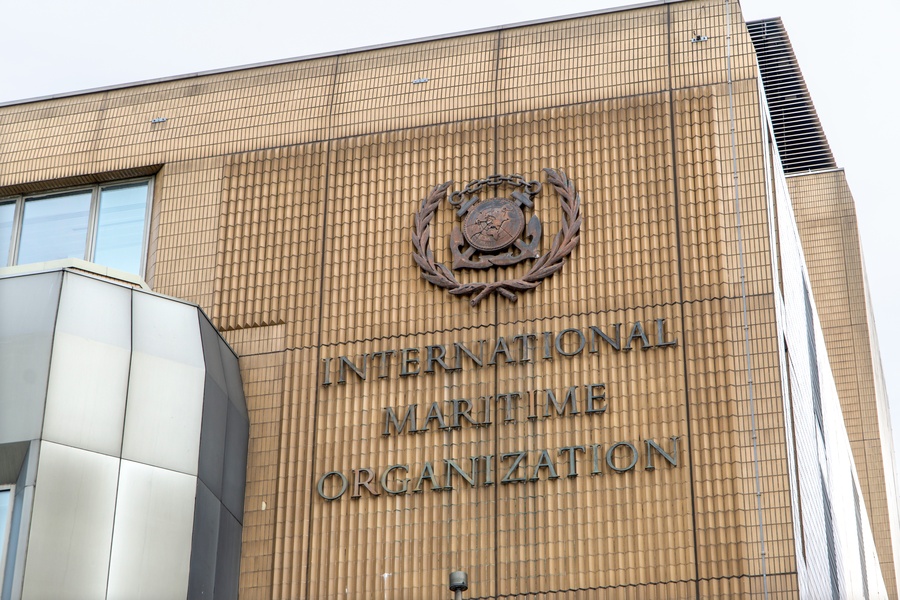
The International Maritime Organization (IMO) Net Zero Framework remains under negotiation after MEPC 84 in London, although formal adoption is still uncertain.
The meeting ended on 1 May after five days of talks at IMO headquarters. Nearly 100 delegations addressed the framework’s future, with 55 countries supporting it as the basis for further work, including its carbon pricing mechanism. Another 51 backed proposals to reopen or weaken the plan, including options to remove carbon pricing.
The committee agreed to hold two intersessional working group meetings in September and November before MEPC 85 at the end of November. A resumed extraordinary session is planned for 4 December.
IMO secretary-general Arsenio Dominguez said the process was “back on track” but added that trust must be rebuilt through further work.
Analysis from the UCL Shipping and Oceans Research Group showed that support had shifted back toward the framework. Five countries that previously supported adjournment in October moved back in favour of the Net Zero Framework, while 10 countries that had abstained or not taken a position also supported it. Two countries moved the other way.
Alternative proposals from Japan and Argentina failed to gain broad backing. Japan’s plan to remove carbon pricing received support from seven member states, while the Argentina-led proposal to remove both the carbon price and fund drew 24.
The International Chamber of Shipping said the talks were constructive but noted that many member states still require further changes before adopting a global regulatory framework.
MEPC 84 also adopted a new Emissions Control Area for the Northeast Atlantic, covering the exclusive economic zones of Greenland, Iceland, the Faroes, Ireland, the UK, France, Spain and Portugal. The ECA will take effect in 2028 and introduce tighter limits on sulphur oxides, nitrogen oxides and particulate matter.
The committee also adopted a resolution condemning attacks on commercial shipping in the Strait of Hormuz and warning of marine pollution risks in the Persian Gulf. Other outcomes included a mandatory code for transporting plastic pellets in freight containers, updated ballast water management guidelines and agreement in principle to extend the underwater radiated noise experience-building phase to 2028.
Environmental observers said the framework had survived but warned that continued open-ended talks would not be enough.