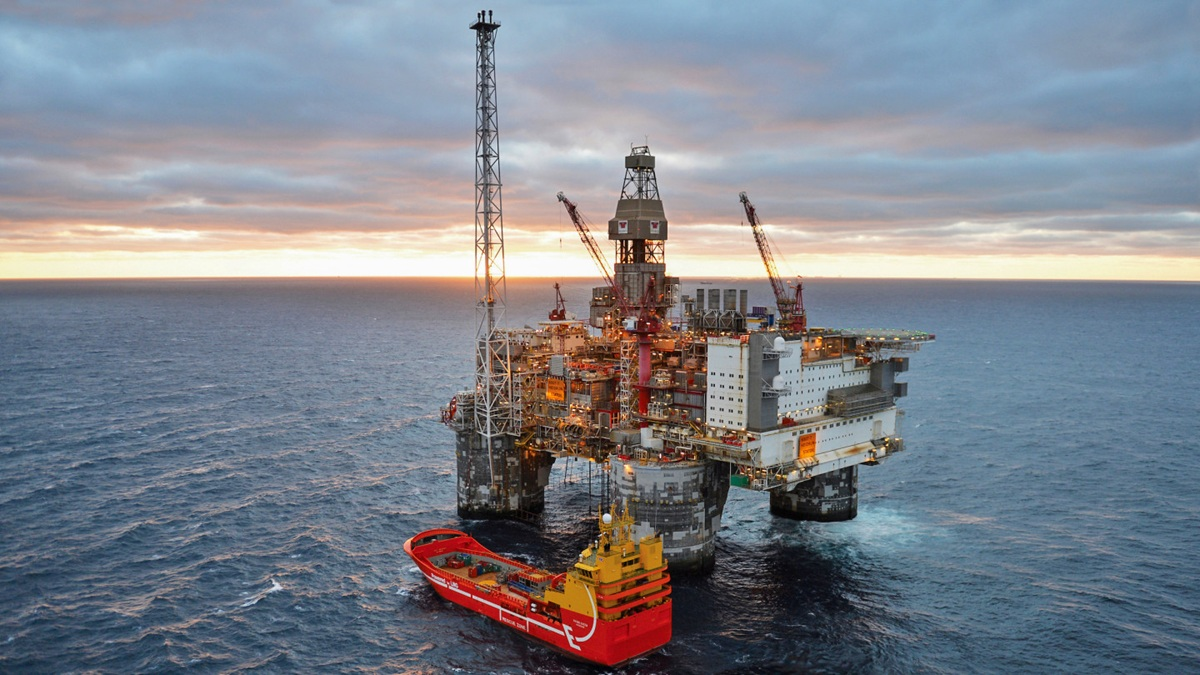
The Heidrun oil and gas field off mid-Norway marked 30 years of production in October after delivering more than 1.5 billion barrels of oil and gas, compared with an original estimate of 750 million barrels.
Current production averages about 60,000 to 65,000 barrels per day, and operations are expected to continue for decades. Further area development is also being evaluated to support long-term output.
Conoco discovered the field in 1985 and brought it on stream in 1995. At startup, Statoil, now Equinor, took over operatorship, while ConocoPhillips continued as a partner. The company currently holds a 24% interest in the field.
At peak production, Heidrun produced nearly 250,000 barrels per day. The field also recorded output of 270,854 barrels on 24 December 1996.
Thomas Eide Maeland, Joint Venture Asset Manager POA and ConocoPhillips’ representative in the licence, said work is continuing to maintain production at the highest possible level. He also said there are still oil and gas volumes in the area that can be produced.
Recent upgrades have included a new gas processing module installed in 2023, which improved efficiency and sustainability. The Heidrun platform is also described as a solid, high-quality installation with the capacity to handle both current and future production in the area.
David Hendicott, General Manager, Non-Operated & Strategic, Europe, said ConocoPhillips had contributed to technology development and value creation at Heidrun.
The field has also been a major contributor to Norway’s economy. About 80% of its value has returned to the state through taxes and ownership, supporting public services and the pension fund. The field has also created thousands of jobs and continues to focus on energy-efficient production.