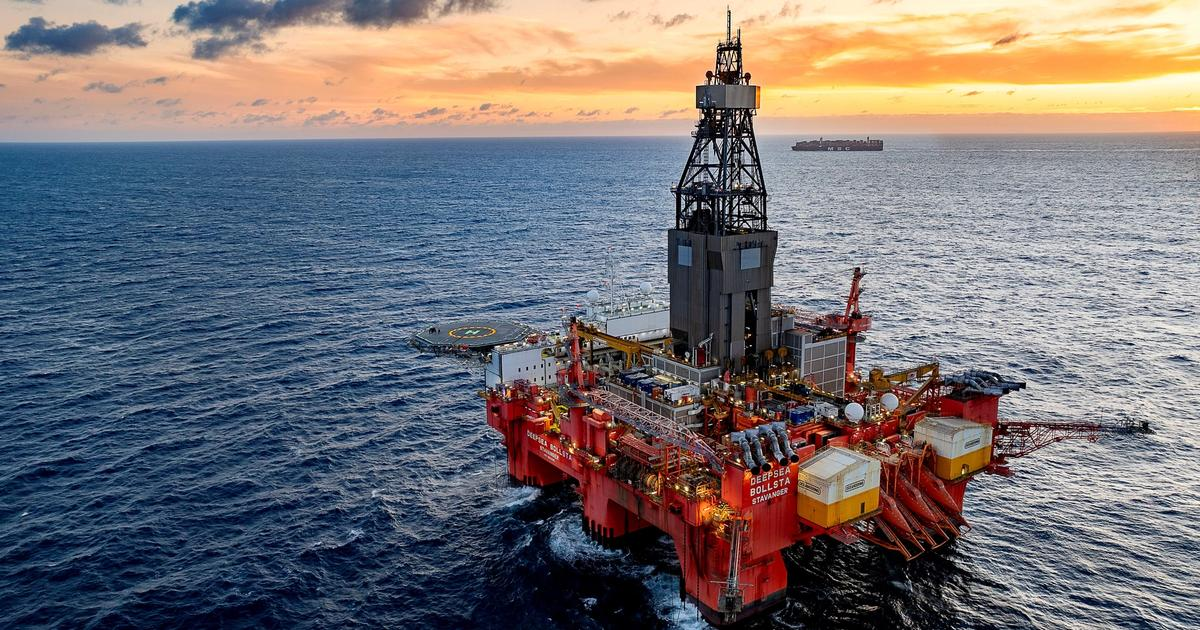
Equinor has finished its investigation into a well-control event on Deepsea Bollsta in the Norwegian North Sea, placing it in the company’s highest severity category.
The incident happened on 23 September 2025 during plugging work on the Troll field. While crews were cutting a 13-3/8″ casing at about 510 m depth, gas and fluid leaked and spread to the drill floor and into the shaker room, where cuttings are separated from drilling fluid before it is returned to the well.
Equinor said automatic gas detection activated the rig’s safety systems and disconnected potential ignition sources. The crew then operated the blow-out preventer (BOP) and the diverter system in line with procedures, routing gas, fluid and pressure away from the rig until the BOP closed.
The BOP shut after 71 seconds, stopping the gas flow. Equinor reported the situation was normalised within 30 minutes. Following the event, the company introduced a requirement to close the BOP during shallow cuts and when pulling casing, regardless of activation time.
Investigation calculations estimated that about 930 kg of gas escaped over a short period. Equinor classified the occurrence as a red 1 incident in its management system. Combustible gas was briefly present on the drill floor and in the shaker room, while potential ignition sources were disconnected.
One person struggled to evacuate due to differential pressure in the room, sustained minor injuries after forcing their way out, and received first aid on board. The gas-and-fluid column also damaged a ceiling ventilation system.
Equinor concluded that ignition would have required different circumstances. The immediate cause was the BOP being in the open position when the casing was cut, with confined gas present behind the casing. Although the annulus behind the casing was logged before the cutting, the equipment was not correctly calibrated, so the gas was not identified in advance.
The company stated the event did not have the potential for an uncontrolled blowout because the gas came from a limited volume behind the casing and was not in contact with the reservoir. It also said barriers against the reservoir remained intact.