Search
Close this search box

Israel Orders Chevron to Halt Leviathan Gas Production

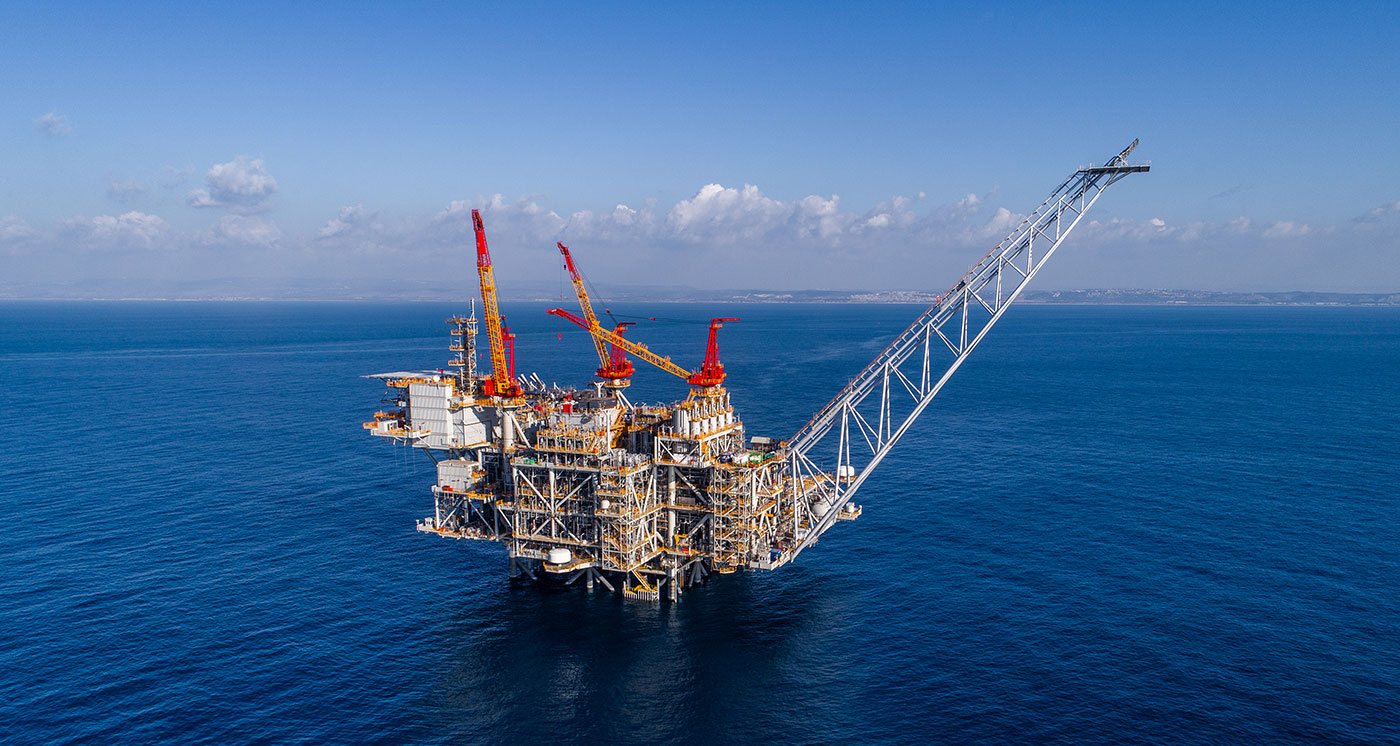
Israel directed Chevron Mediterranean to suspend Leviathan gas production 130 km offshore Haifa. The halt will temporarily impact Israel’s grid and supplies to Israel, Egypt and Jordan, with partners set to notify customers under force majeure.
Leviathan Natural Gas Field, Image source: NewMed Energy (official website)

SHARE ARTICLE

Israel’s Minister of Energy and Infrastructure has directed Chevron Mediterranean to suspend natural gas production from the Leviathan Field, located 130 km offshore Haifa. The security measure comes as tensions escalate across the Middle East, with Iran having launched attacks on production facilities.

The enforced shutdown will temporarily impact gas supplies to Israel’s national grid and deliveries to customers in Israel, Egypt and Jordan. Leviathan’s gas is processed offshore before being transmitted to shore and fed into the Israeli system for onward distribution.

Leviathan produces through four subsea wells linked to a subsea manifold. Gas flows via two 120-km pipelines to the Leviathan platform in shallow water for processing, then moves ashore through export and domestic transmission routes.

Israel’s Commissioner of Petroleum Affairs also notified the Leviathan partners that, in light of recent developments and the special state of emergency on the home front, Chevron must be prepared to operate under flexible procedures.

Co-venturer NewMed Energy said the partners would notify customers of the activation of force majeure following the mandated production suspension.
Editorial Note:
This article was prepared with the assistance of AI tools to enhance clarity and efficiency.
All information has been reviewed and verified by the HMT News editor.
OEUK urges the UK government to prioritise North Sea oil, gas and renewables as the Iran war intensifies concerns over energy imports and security.
SAL completed a two-day emergency response training programme aboard MV Lone, covering rescue exercises, confined spaces and offshore safety preparation.
Petrosen said Senegal’s Yakaar-Teranga deepwater gas project could require around $7.5 billion to develop 25 trillion cubic feet of recoverable gas resources.

Subscribe to HMT WEEKLY

Receive HMT WEEKLY in your mailbox.

Heavy Marine Transport News, Delivered Daily — Stay informed on shipping, offshore, and global logistics.

SECTION

INFORMATION

CONTACT

For general inquiries and to contact us,
please email: info@hmt-news.com