Low-carbon fuel demand is rising across multiple sectors, especially in hard-to-abate industries where electrification alone is not enough. At the same time, substantial volumes of natural gas associated with offshore oil and gas production remain under-utilised, as limited export infrastructure or commercial constraints can prevent these resources from reaching the market.
Blue ammonia provides a route to convert offshore gas into a transportable, lower-carbon fuel that can support industrial use as well as energy applications. The International Energy Agency forecasts that the use of low-carbon ammonia as fuel for power generation and maritime transport must increase significantly to achieve emissions reduction targets in these sectors.
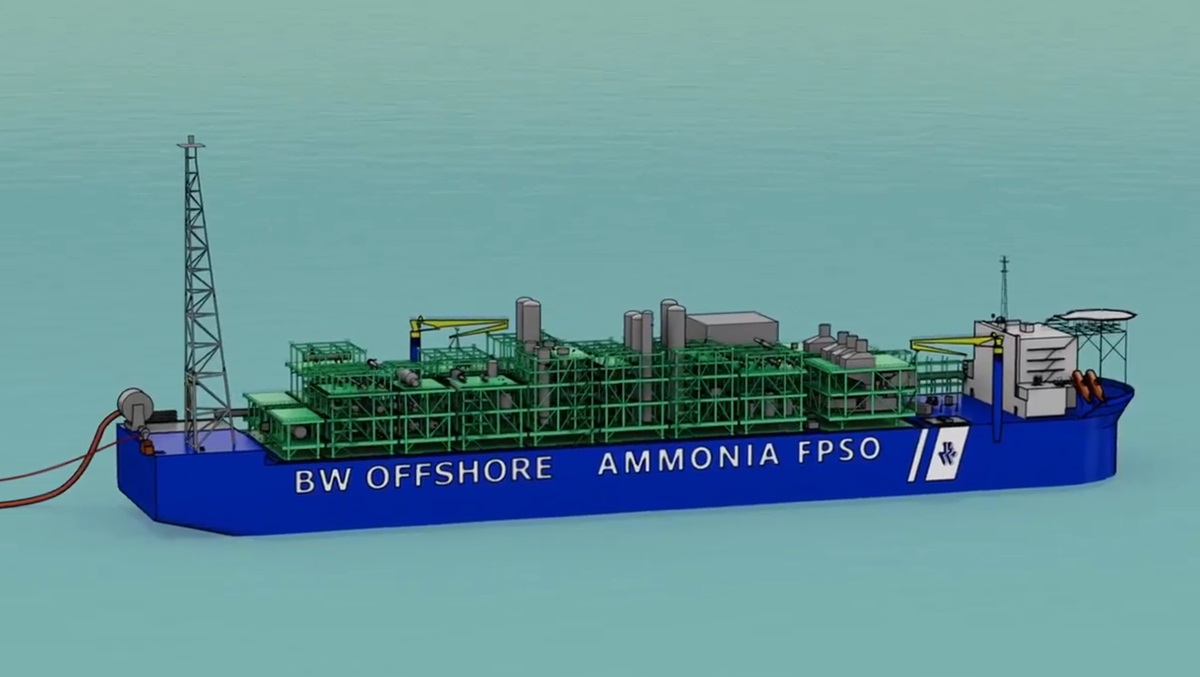
BW Offshore has developed a floating blue ammonia production, storage and offloading concept with McDermott International, combining offshore production and operations experience with large-scale engineering and execution capabilities.
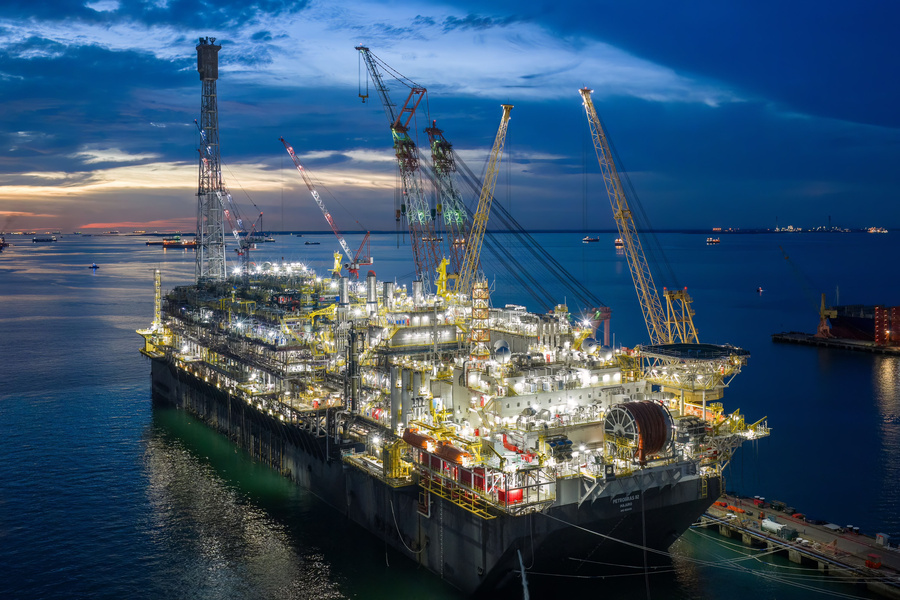
The floating blue ammonia FPSO is designed as an integrated offshore production and export unit located close to suitable gas sources and CO₂ storage sites. Natural gas is supplied from nearby offshore facilities via subsea flowline and processed onboard. It is converted into hydrogen and then into ammonia using a low-carbon process.
The concept is designed for a gas intake capacity of up to 3 million cubic metres per day and targets production of more than 1 million t of ammonia per year. Carbon capture is incorporated, with up to 99% of the CO₂ generated during production captured and compressed for export to geological sequestration or other approved use. The estimated carbon intensity is around 0.5 t of CO₂ per t of ammonia, intended to align with prevailing international criteria for low-carbon hydrogen derivatives.
Options are available to further reduce emissions from onboard power generation systems, lowering carbon intensity to almost zero to meet future market needs. By placing production offshore, the floating solution avoids constraints linked to large onshore ammonia facilities, including land availability, permitting complexity and onshore operational exposure. The FPSO-based design also enables greater flexibility in location and has the potential for faster deployment compared with onshore alternatives.
Ammonia is liquefied and stored in refrigerated tanks within the FPSO hull and offloaded directly to gas carriers. This removes the need for pipeline, terminal or port infrastructure, supporting direct export to international markets with simplified logistics.
The concept builds on BW Offshore’s experience in designing, constructing, financing and operating complex floating production units, alongside McDermott International’s engineering, procurement, construction, installation and technology integration expertise. The floating blue ammonia FPSO can be structured with capital-efficient leasing models, providing flexibility for operators seeking to monetise surplus gas while managing upfront investment and long-term exposure.
The concept forms part of BW Offshore’s New Ventures portfolio focused on offshore solutions that support the energy transition while leveraging established offshore competencies. By converting surplus natural gas into a lower-carbon fuel, floating blue ammonia has the potential to unlock new value streams, support energy security and contribute to a more diversified energy mix.