Facing the prospect of shutting down a partly built New York offshore wind project, Equinor has secured a preliminary injunction that allows construction on Empire Wind to restart despite a federal stop-work order issued by the Trump administration.
On Thursday, 15 January, Judge Carl Nichols of the U.S. District Court for the District of Columbia ruled in favour of Equinor and Empire Wind, temporarily blocking enforcement of the 22 December directive that halted construction on offshore wind projects. It is the second federal court this week to grant such relief, and the judge said he would move quickly to rule on the main challenge to the order.
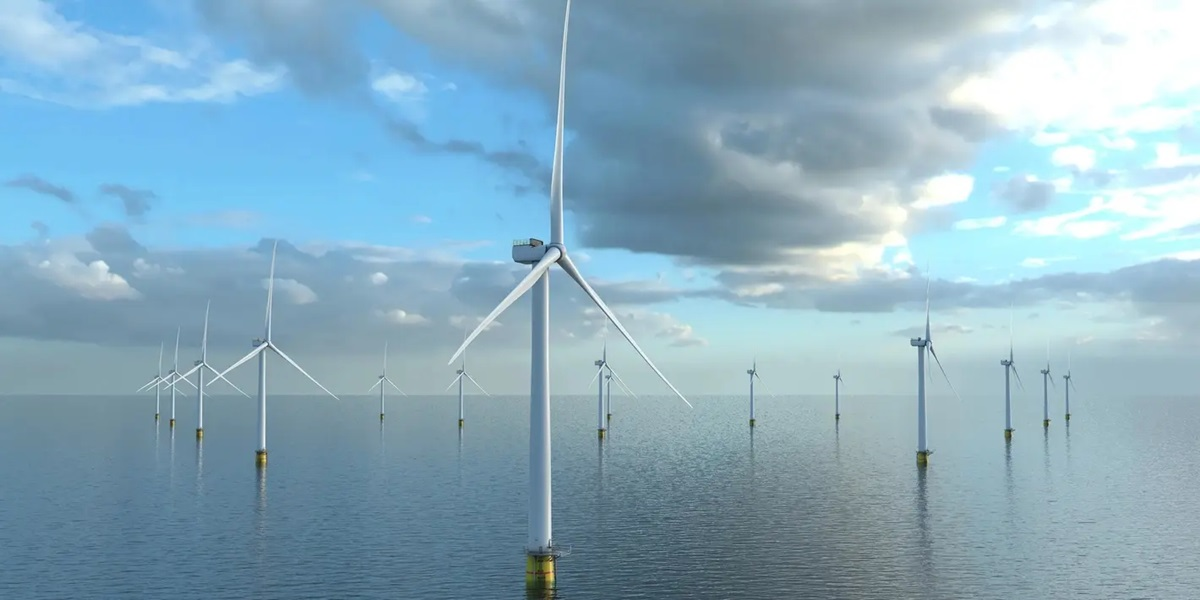
The injunction was granted one day before Empire Wind had told the court it would have to shut down and abandon the project if work could not resume. The offshore wind farm, located south of Long Island, is reported to be about 60% installed and is scheduled for completion in 2027. The company described the work programme as tightly sequenced and warned that the interruption ordered in December placed the entire development at risk.
A heavy-lift installation vessel has already arrived on site with the crane needed to install the offshore substation topside. Equinor argued that the vessel is under contract and cannot simply remain idle at the field, and that it has no realistic option for storing the substation for a later campaign. The company also pointed to rising costs caused by the standstill and potential consequences for project financing.
Judge Nichols heard arguments on Wednesday and indicated he would rule promptly on the request for interim relief. In granting the preliminary injunction, he concluded that Empire Wind was likely to suffer serious, non-recoverable harm if the stop-work order stayed in place. He also asked the federal government and Empire Wind to submit by 20 January a proposed accelerated briefing timetable so that he can promptly address the legality of the order.
After the decision, Equinor and Empire Wind issued a statement saying they were focusing on safely restarting offshore construction activities and would continue to engage with the U.S. government to support safe and responsible operations.
The dispute arises from a directive by the U.S. Department of the Interior instructing five offshore wind projects under construction to halt work as of 22 December. The department cited new confidential analysis prepared by the Pentagon that it says identifies national security risks. According to reports, the assessment examines how turbine structures and moving blades may affect radar performance and introduce additional clutter in sensor readings.
Developers say they have not been briefed on the underlying information. Ann Navaro, counsel for Empire Wind, told the court that the administration has not responded to requests for a secure briefing on the new material. Ørsted and Dominion Energy have made similar points in their own lawsuits, and in the case involving Dominion Energy’s Coastal Virginia Offshore Wind project, the judge has ordered the Pentagon to provide the data to the court.
Earlier this week, Ørsted obtained a comparable preliminary injunction allowing work to resume on its Revolution Wind project off Rhode Island. A hearing is scheduled for Friday on Dominion Energy’s request for permission to restart construction on the Coastal Virginia Offshore Wind project. Ørsted has also filed a separate case over its Sunrise Wind project off New York’s Montauk Point. In Massachusetts, Avangrid, the developer of Vineyard Wind 1, said it has asked the U.S. District Court for the District of Massachusetts for a TRO and a preliminary injunction against the suspension order.
Connecticut, Rhode Island, and New York have also brought cases in support of the offshore wind projects, saying the halt undermines their economic development plans.
This is not the first time Empire Wind has faced a federal pause. The Trump administration previously ordered work to stop for a month shortly before offshore activities were due to begin in the spring. That dispute was resolved without a court ruling after Norwegian government officials raised the issue with the White House, and New York State reportedly agreed to allow a stalled pipeline project to move forward.
A White House spokesperson told Bloomberg that the federal government will continue to oppose the offshore wind projects.