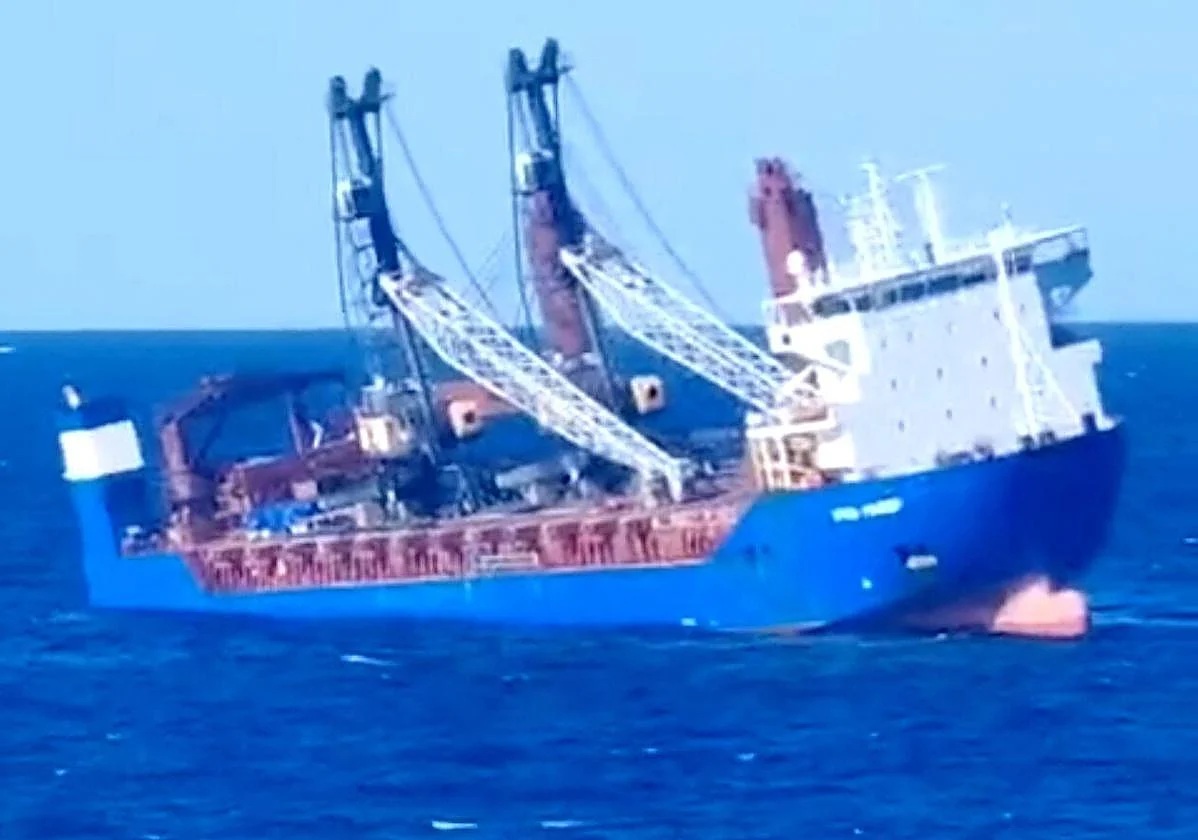
Reporting attributed to a Spanish investigation into the December 2024 loss of the Russian heavy-lift vessel Ursa Major says the ship was carrying undeclared, strategically sensitive cargo, according to Spanish regional newspaper La Verdad, as cited by maritime and defense outlets.
The reports say investigators believe the ship was transporting two VM-4SG naval nuclear reactor hulls and that the destination was North Korea—an assertion that, if accurate, would point to an illicit transfer of nuclear-related technology. An official public release in the materials available to these outlets has not corroborated La Verdad’s account.
Reuters’ contemporaneous coverage of the sinking in December 2024 described Ursa Major as having gone down in the Mediterranean after an engine-room explosion, with 14 crew rescued and two missing, and with the owner saying the voyage to Vladivostok involved port cranes and icebreaker-related cargo.
Where the Spanish investigation reporting differs is on the cargo declaration and the damage narrative. The captain had declared that the cargo consisted of empty containers and port-related equipment, the outlets reported. Still, aerial surveillance allegedly identified heavy containers at the stern that were not listed. According to the same reporting, Spanish authorities recorded a sudden course change and propulsion loss on 22 December 2024, followed by a distress call the next day from roughly 60 nautical miles off Cartagena.
The same accounts say an examination found a hull breach with metal deformation inward—an indicator consistent with an external impact rather than an internal blast. They further speculate that the breach pattern did not resemble a conventional torpedo and could align with a high-speed supercavitating weapon. However, this remains an inference in the reporting rather than a confirmed attribution by Spanish authorities.
The incident response described in the report includes the appearance of the Russian landing ship Ivan Gren, which allegedly demanded that Spanish vessels withdraw from the area, followed by flares and electronic warfare activity. The ship then disappeared from the surface and ultimately sank to a reported depth of about 2,500 m, with seismographs said to have recorded vibrations consistent with a low-yield underwater detonation at the time of the final descent.
Subsequently, the Russian oceanographic vessel Yantar arrived on scene; analysts cited by the outlets suggest it may have supported an operation to remove, destroy, or conceal remnants of the alleged cargo.
The claims have gained additional attention as North Korea has recently publicized progress on a nuclear-powered submarine hull, raising renewed questions among analysts about how Pyongyang could source reactor-related know-how and components.