Maersk has completed its first successful trial of blending ethanol with methanol, marking a significant step in its efforts to develop alternative fuels for its fleet. The company now plans to increase the ethanol concentration and conduct additional trials using 100% ethanol, expanding the supply options for its dual-fuel vessels.
A major challenge for Maersk and other shipping companies is the availability of methanol and other alternative fuels. There are concerns about whether fuel suppliers can scale up production to meet the rising demand from the shipping industry. In response, Maersk aims to run more trials to ensure a stable and reliable fuel supply to support its decarbonization initiatives.
Ethanol and methanol are both alcohols, making them compatible for blending. Ethanol, which has been used since the 1970s to extend gasoline supplies, is commonly blended with gasoline in many countries, with the U.S. and Brazil being the largest producers of ethanol worldwide.
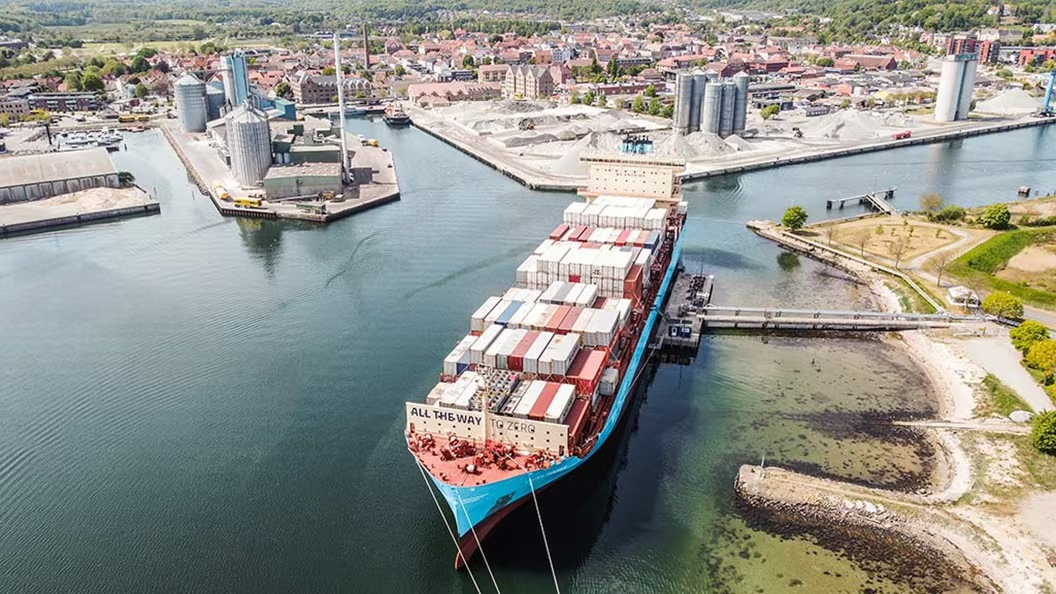
In 2023, Maersk launched its dual-fuel feeder vessel Laura Maersk (32,600 dwt) for operations in the Baltic region. This vessel has served as a test platform for methanol, which has been used for three years without any issues.
The first trial with an E10 blend—10% ethanol and 90% methanol—began in October. The fuel powered Laura Maersk for a period of one month to one and a half months, with no performance issues. During the trial, the company monitored factors such as ignition quality, combustion characteristics, corrosion, and emissions, particularly focusing on NOx emissions.
Following the successful E10 trial, Maersk plans to test an E50 blend, consisting of 50% ethanol and 50% methanol. After that, the company will conduct a trial with 100% ethanol.
Currently, Maersk operates 19 dual-fuel vessels, with more planned for delivery. Starting in 2027, the company will also incorporate time-chartered dual-fuel LNG vessels. As part of its commitment to low-emission fuels, Maersk continues to diversify its fuel offerings, including bio- and e-methanol, biodiesel, and liquefied biomethane.