Norway’s state-controlled oil and gas company Equinor has reported two new gas and condensate discoveries in the Sleipner hub of Norway’s North Sea sector, calling them its biggest discoveries of the year to date. The company says the volumes can be routed to the European market by tying them back to current infrastructure.
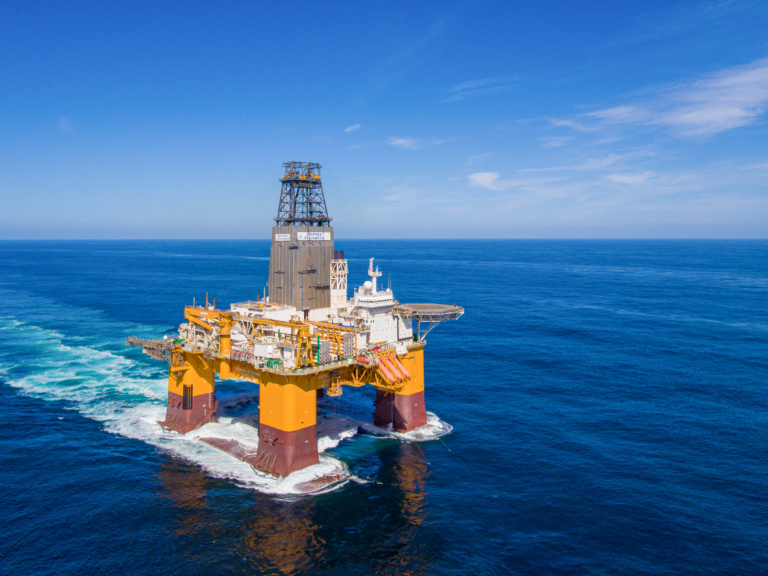
The discoveries were made at the Lofn and Langemann wells in production licence 1140, located between the Gudrun field and the Eirin field. Early estimates indicate recoverable resources of 5–18 million standard cubic metres of oil equivalent, equal to about 30–110 million barrels. Drilling was carried out by the rig Deepsea Atlantic, operated by Odfjell Drilling, which will now move to the next exploration well in the same area.
The licence was awarded to Equinor in 2022. The company identified the prospects using ocean bottom node seismic, with sensors placed on the seabed to provide more detailed geological data than conventional surface seismic surveys.
Kjetil Hove, Executive Vice President for Exploration & Production Norway at Equinor, links the new finds to the company’s broader exploration strategy on the Norwegian Continental Shelf. He notes that the results confirm the remaining resource potential on the shelf at a time when Europe still depends on stable deliveries of oil and gas. Hove also points out that discoveries near established fields can be brought on stream quickly via subsea tiebacks, with a limited environmental footprint, low production-related CO₂ emissions and solid project economics. According to him, Equinor intends to accelerate such near-field developments on the Norwegian Continental Shelf and, together with its partners, is committed to drilling five more exploration wells in the Sleipner area to support export capacity and value creation.
Partner Aker BP reports that wells 15/5-8 S (Lofn) and 15/5-8 A (Langemann) are located around 40 km northwest of Sleipner A, between the Gudrun field and the Eirin field. Both wells proved gas and condensate within the Hugin formation, which offers a sandstone reservoir of good quality. The wells fall into the high-pressure, high-temperature (HPHT) category and, after extensive data acquisition, have now been permanently plugged and abandoned.
For Aker BP, Lofn and Langemann conclude what CEO Karl Johnny Hersvik describes as a strong exploration year. Across three major discoveries – including Omega Alfa and Kjøttkake earlier in the year – the company has added more than 100 million barrels of net resources. Hersvik says 2025 is Aker BP’s most successful exploration year since Johan Sverdrup was discovered in 2010 and sees these volumes as important to maintain output of more than 500,000 barrels per day well into the 2030s.
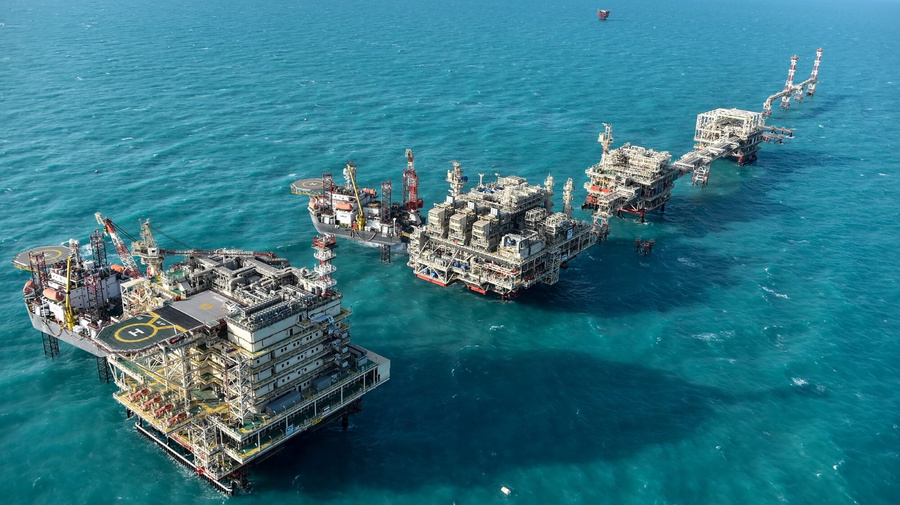
The Sleipner asset portfolio comprises the gas and condensate fields Sleipner Øst and Sleipner Vest, as well as Gungne, and processes hydrocarbons from the Sigyn, Utgard, Gudrun and Gina Krog fields that are tied in. The area is a key hub for Norwegian gas exports, supplying dry gas to European markets, while unstable oil is shipped to Kårstø for processing and export. Sleipner also handles gas routed from Kollsnes and Nyhamna, with onward flow to Draupner, Zeebrugge and Easington.
The partners now plan to assess development solutions for Lofn and Langemann that build on existing Sleipner infrastructure to enable efficient, low-emission production. These latest gas and condensate finds follow the Omega Alfa exploration programme in Norway’s North Sea sector, completed in August 2025, which resulted in a major oil discovery with recoverable volumes estimated at 96–134 mmboe.
Omega Alfa ranks among Norway’s biggest commercial finds of the past decade. After the East Frigg discovery in 2023, Aker BP sees Omega Alfa as further evidence that new exploration methods can deliver sizeable results. Together, these discoveries support the company’s ambition to produce over a billion barrels from the Yggdrasil area.
Earlier in the year, the partnership also discovered oil and gas at Kjøttkake in licence PL1182S, located in the Northern North Sea. The reservoir shows good quality, with recoverable volumes estimated at 39–75 mmboe, close to existing infrastructure around the Troll–Gjøa area. Following a transaction with Japex announced in July, Aker BP increased its stake in Kjøttkake to 45%. Last month, the company agreed with DNO to take over operatorship in the development phase, enabling it to apply its fast-track development approach as the partners evaluate project concepts, with first oil targeted for 2028.