Japan is preparing to overhaul its offshore wind tender system, with a government policy committee outlining proposals that shift scoring away from speed and toward projects judged more likely to reach completion. The same package would also widen access to long-term revenue support for some already-awarded schemes.
The reform follows the withdrawal of three Round 1 projects — two sites off Akita and one off Choshi — led by Mitsubishi Corporation, after costs and market conditions undermined the business case for schemes awarded in 2021. Higher equipment and construction prices, weak domestic supply chains and difficulties securing long-term power sales contracts were all highlighted in government analysis of the cancellations. In response, METI and MLIT have put forward two linked policy packages covering both future auctions and support measures for existing projects.
Under the proposed “new offshore wind auction system”, Japan’s 240-point evaluation framework would be retained but rebalanced. Bid price would still account for up to 120 points, while the feasibility block would be adjusted so that construction schedule carries fewer points and detailed implementation and supply-chain plans are given more weight. According to the November 2025 policy document, points for construction schedule would fall from 20 to 10, while project execution capability and domestic supply-chain arrangements would each rise to 25 points.
The committee also proposes replacing the previous relative “top-runner” style grading with a checklist-based evaluation. Each part of a bid – engineering, risk management, financing and local engagement – would be scored against defined minimum and higher-level criteria, with the government stating that this is intended to improve transparency and predictability of assessments. On timing, developers would be allowed up to two extra years on construction schedules, and the scoring would focus on whether the proposed timetable is realistic rather than simply the earliest among competing bids.
Price evaluation would be tightened through the introduction of a bid floor and ceiling. Offers below the minimum or above the maximum would be disqualified; bids at the floor would receive full price points, and offers at the ceiling would still obtain most of the available score. The new framework is described as a way to curb extremely low bids that risk project viability. At the same time, the government plans to reintroduce a 1GW cap per bidder and to strengthen withdrawal rules so that a developer, and related companies, that pull out after winning an auction are barred from the next tender and must provide site survey data free of charge to support re-auctioning.
A separate set of measures targets revenue stability for projects already awarded in Rounds 2 and 3. Offshore wind schemes that accepted a zero-premium feed-in premium (FIP) in those rounds would, on an exceptional basis, be allowed to participate in Japan’s Long-Term Decarbonization Power Source Auction (LTDA). This would give them access to a 20-year capacity-style payment on top of market power revenues, which the government positions as transitional support for projects awarded under earlier, more competitive conditions.
Developers had asked to adjust their original tender prices retroactively to reflect inflation and other cost increases since bidding, but this request was rejected. The policy package instead confirms that only forward-looking price indexation will be available, with the government citing fairness and the difficulty of designing a neutral formula for past periods. At the same time, more flexibility would be allowed to change key components such as turbines and blades, within defined conditions, when market or supplier changes make the original specifications difficult to implement.
The proposals also cover port usage and project lifetimes. Japan’s designated base ports for offshore wind could be used more flexibly, including multi-port strategies, and the authorities are considering adjustments to port fee structures. Occupancy permits in promotion zones would, in principle, be renewable in 10-year blocks once initial terms expire, allowing projects to operate beyond the 30-year period often assumed in early policy designs. The government further plans to refine its non-fossil certificate framework and clarify how environmental value is treated under FIT and FIP schemes, with the intention of making it easier for corporate buyers to procure certified renewable power.
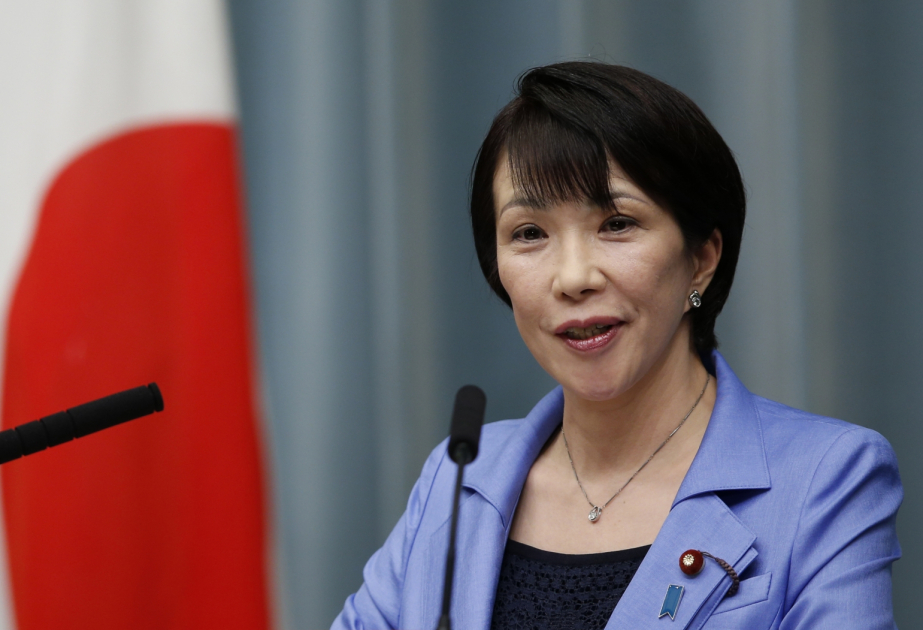
The timing of the reforms coincides with the start of Sanae Takaichi’s term as Japan’s first female prime minister, after she took office in October 2025. In early policy statements, her administration has underlined energy security and industrial competitiveness as core priorities. Industry organisations, including the Global Wind Energy Council (GWEC), have recently called for Japan to adjust its auction framework and offtake arrangements to restore investor confidence after the Round 1 withdrawals and the financial pressure facing Rounds 2 and 3.
See also: GWEC Calls for Offshore Wind Auction Reform to Revive Japan’s Clean Energy Momentum
According to the government documents, the revised rules are intended to be applied first to the re-auction of the three cancelled Round 1 sites and then to later rounds now being prepared. In effect, Japan is moving from a system that strongly rewarded the fastest schedules and lowest nominal prices toward one that gives more weight to credible delivery plans and stable revenues, with the stated objective of ensuring that awarded offshore wind projects are built and kept in operation over the long term.