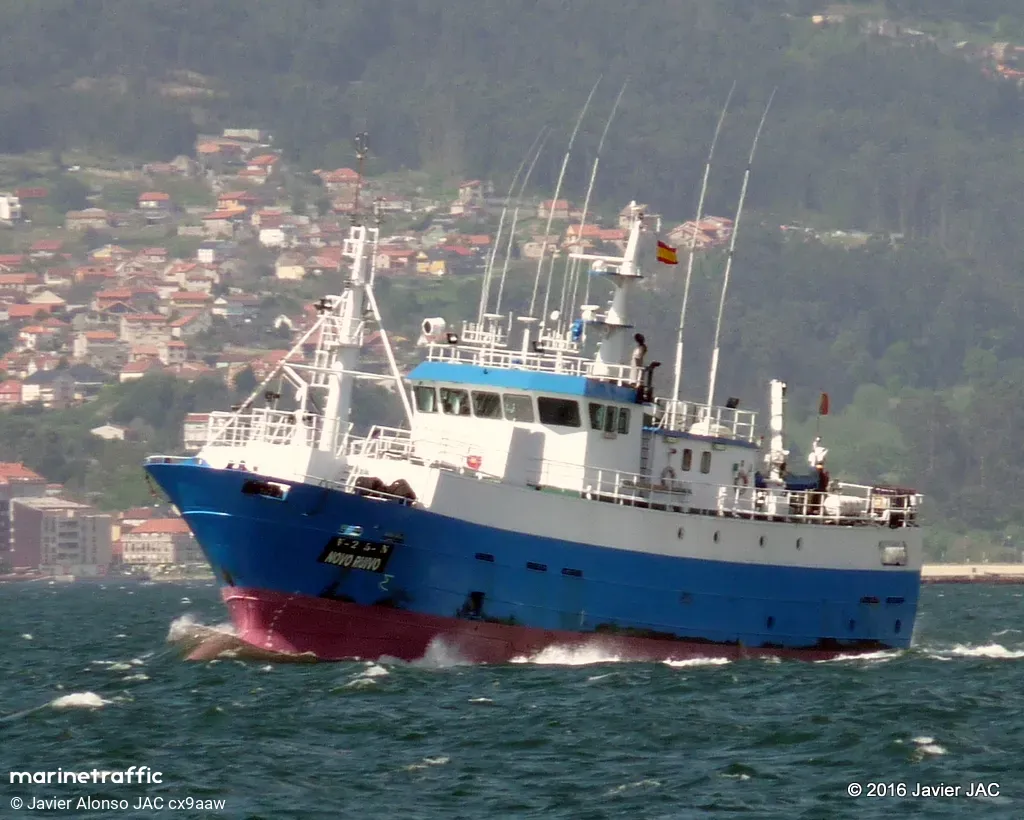
Twelve fishers serving on the Portuguese-flagged fishing vessel Novo Ruivo (IMO 8734671) have spent the last eight months without wages while the vessel remains in Mindelo, Cape Verde. The crew – six from Indonesia and six from Angola – are still on board with no confirmed date for either payment or repatriation. Wage arrears currently stand at USD 68,420.
According to the International Transport Workers’ Federation (ITF), the workers have been left without any means to provide for themselves or their families after months without income. ITF inspector Gonzalo Galan, from the federation’s Fishers’ Support Coordination unit, said the crew are demanding two basic outcomes: that all outstanding wages are settled and that they are returned home safely as soon as possible.
The vessel is owned by Somar – Produtos do Mar Lda, a Portuguese company backed by Spanish capital. The shipowner has cited financial difficulty and has repeatedly assured the fishers that their wages would be paid, but these commitments have not been fulfilled.
The ITF has reported the situation to the joint IMO/ILO database that records cases of seafarer abandonment. The federation says the case represents a serious violation of the ILO Work in Fishing Convention (C188). Portugal ratified the convention in 2019, which means its provisions apply in full to Portuguese-flagged fishing vessels. Under C188, fishing vessel owners must pay wages regularly, provide acceptable living and working conditions on board and ensure that fishers can be repatriated safely.
Galan noted that it is alarming to see such cases continuing on vessels controlled from Europe. Despite national and international rules, he said, European-owned ships are still repeatedly linked to cases involving abuse of fishers from outside Europe, often from Global South countries, who are effectively left without meaningful protection of their rights.
The ITF is calling on employers in the European fishing industry to enter collective bargaining and agree a sector-wide agreement that would give foreign crews stronger contractual protection when working on vessels financed by European interests.