Early signs of a traffic rebound are appearing in the Suez Canal, supported by improved conditions in the Red Sea and cautious reassessment of routing strategies by global carriers. The shift follows the Houthis’ suspension of maritime attacks after the ceasefire between Israel and Hamas, coinciding with the two-year mark of the Galaxy Leader hijacking.
Clarksons figures show an uptick in vessel movements: the canal handled an average of 244 ships per week in October and 269 in November, compared with 229 during the first nine months of 2025. Activity remains below the 495–500 weekly crossings recorded before large-scale diversions began in late 2023, but the latest data indicates a measurable improvement.
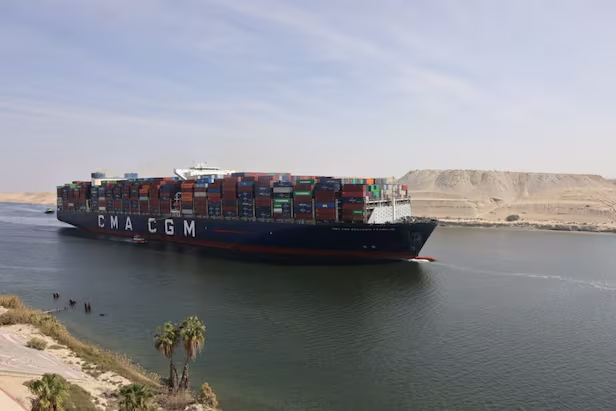
The Suez Canal Authority (SCA) is actively engaging operators to reinforce the waterway’s readiness. Admiral Ossama Rabiee inspected major vessels including the CMA CGM JULES VERNE (396 m, 176,000 t) as it completed a northbound transit after passing Bab El-Mandab, and observed the CMA CGM HELIUM (335 m, 130,000 t) on its first passage. During these visits, Rabiee reiterated that stable navigation conditions should encourage shipping lines to reconsider Suez-based schedules.
Earlier this month, the SCA announced upcoming meetings with major carriers to support trial voyages, partial returns, or phased reinstatement plans. CMA CGM, which continued operations despite security pressures, remains prominent in the latest round of transits. Captain Slavko Malasic of the JULES VERNE noted recent improvements in the canal’s southern sector aimed at enhancing navigation safety and reducing waiting times.