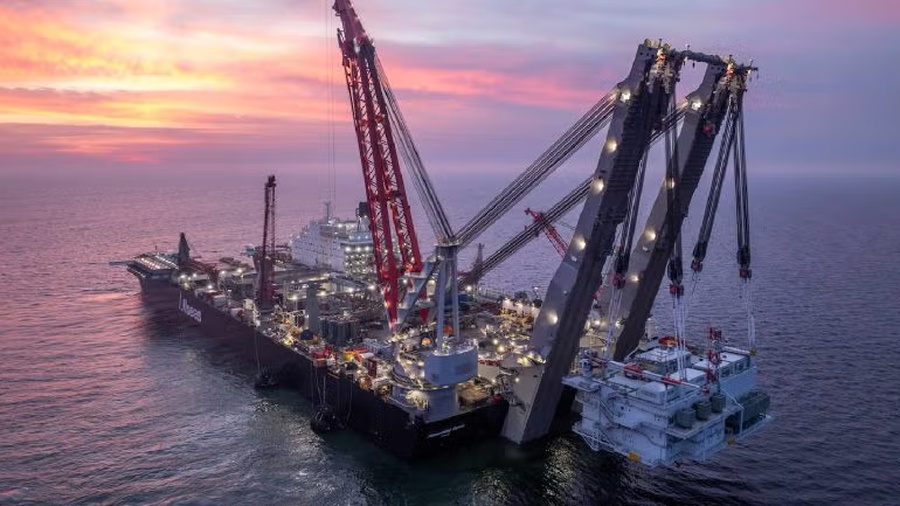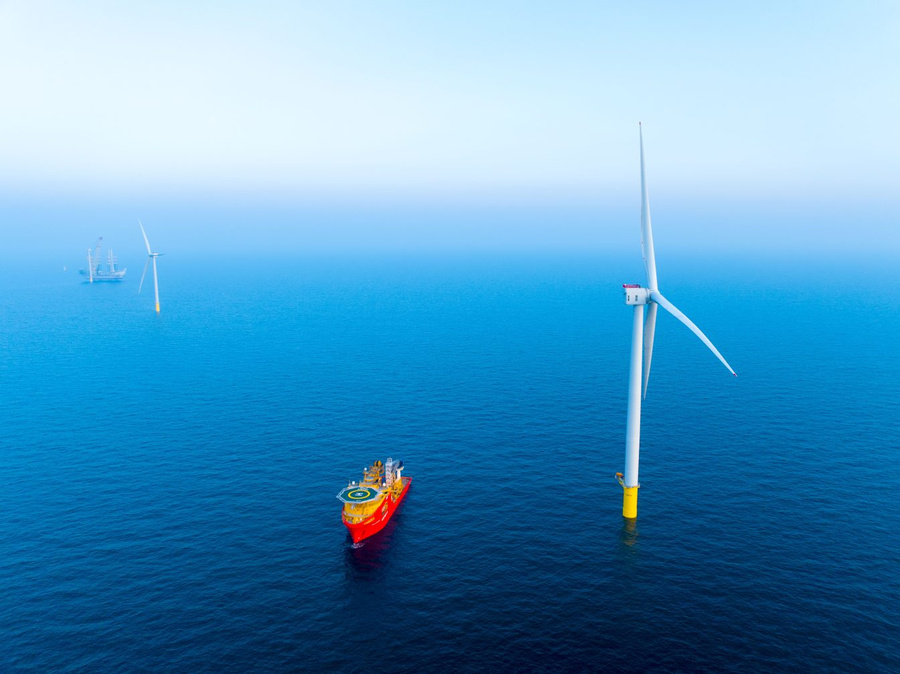
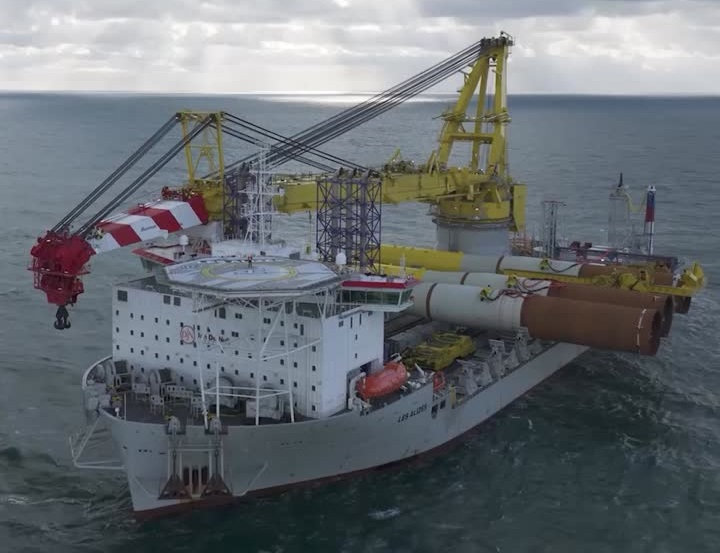
Ørsted has launched Osonic, a platform built around the company’s low-noise jetting method for offshore monopile installation, and has entered its first cooperation arrangement for the technology with German energy infrastructure asset manager Luxcara. The agreement marks the beginning of Osonic’s transition into commercial use.
Osonic employs a jetting system designed to lower resistance in the seabed, allowing foundations to settle with substantially reduced underwater noise compared with common piling methods. Ørsted reports that when the approach was deployed at the Gode Wind 3 Offshore Wind Farm in the German North Sea earlier this year, underwater noise levels were reduced by 99%, reaching values close to natural background levels measured in the German Bight. Luxcara plans to apply the method across its offshore wind developments in Germany.
The method has been refined over several years and was first used in the field at Gode Wind 3, which was commissioned in early 2025. By establishing Osonic as a dedicated platform, Ørsted is preparing to license the technology and associated services to external developers involved in offshore wind projects in Europe. The company states that the platform aligns with its approach to directing investments and may support future offshore wind project performance.
Patrick Harnett, Executive Vice President and Chief Construction Officer at Ørsted, said that the arrangement with Luxcara represents Osonic’s move from a concept to a commercial offering and noted growing interest in the method across major European markets. Luxcara’s Director of Offshore Wind & Green Hydrogen, Holger Matthiesen, stated that the company began assessing low-noise installation approaches in 2022 and selected this technology based on its results under conditions comparable to those expected in Luxcara’s projects.
Under the agreement, Ørsted will license Osonic and provide engineering, procurement, and construction consulting to support deployment. The patent-pending technology offers an alternative to conventional pile-driving with lower marine impact through its jetting-based approach.
Osonic received one of Germany’s national sustainability awards in the product category in October 2025. The award committee highlighted the method’s ability to combine biodiversity considerations with renewable energy development.