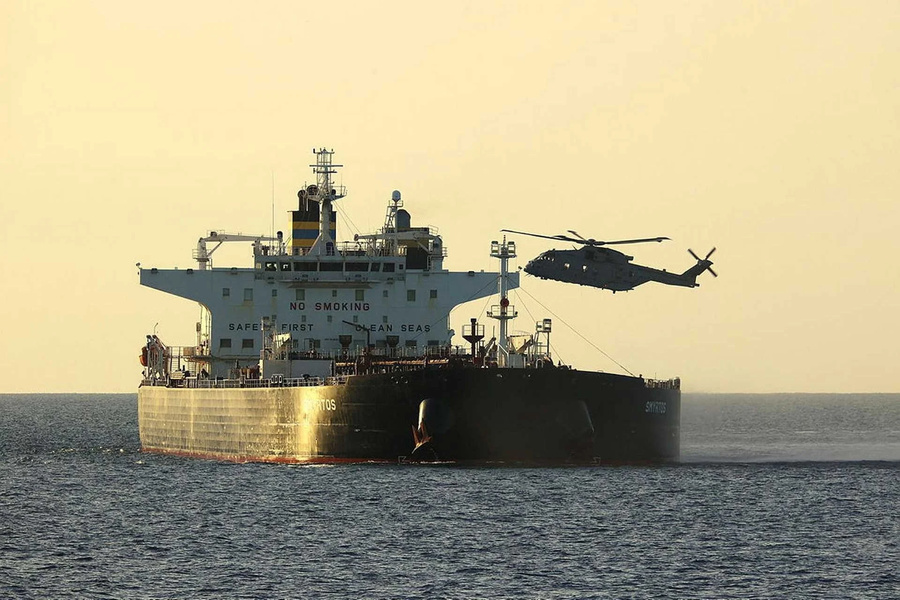
The European Union has called on Greece to strengthen its actions against Russia’s so-called “shadow fleet,” used to export oil in defiance of Western sanctions.
Speaking at a joint press conference in Athens with Greek Foreign Minister Giorgos Gerapetritis, EU High Representative for Foreign Affairs Kaja Kallas said, “We can all do more to close down the networks of the shadow fleet as well.” She added that “more of Russia’s revenues come from oil, and this comes from their shadow fleet,” emphasizing the need to combat Moscow’s sanction evasion efforts.
The EU has intensified pressure on Greece as part of its 19th package of sanctions against Russia, expanding restrictions on maritime activity and banning imports of Russian liquefied natural gas (LNG). The new measures add 117 vessels, raising the total number of ships under sanction to 557. These vessels face port entry bans and a prohibition on related maritime services, including reinsurance.
The sanctions also target maritime registries that issued false flags to shadow fleet vessels, allowing them to appear compliant with certification requirements. Under the new package, LNG imports under long-term contracts will be banned from 1 January 2027, and within six months of the sanctions’ entry into force for short-term contracts.
Kallas, who also met with Greek Prime Minister Kyriakos Mitsotakis at the Maximos Mansion, said the EU remains committed to tightening pressure on Russia’s economy. She noted that “there are now over 550 ships covered by sanctions, but this has not killed the business model yet.” Kallas also warned that these “dirty tankers pose a real threat to our seas as well, when it comes to environmental worries.”
Greece, which operates 5,691 ships representing about 20% of global deadweight tonnage and 61% of the EU fleet, has faced scrutiny over its role in maritime trade with Russia. Greek shipowners maintain that their operations comply fully with international and EU laws and that due diligence is conducted on all buyers.
According to maritime analytics firm Windward, the number of Greek-owned vessels transporting Russian crude has fallen since August, after the EU signaled the introduction of a lower oil price cap. Under this rule, Western marine service providers — including shipowners, charterers, insurers, and traders — can only handle Russian crude if purchased below the cap and properly attested.
Kallas expressed appreciation for Athens’ cooperation in EU naval operations in the Mediterranean and Red Sea. She said further discussions would focus on “how we can really increase the cost for the Russians to sail their shadow fleet and not really affect our ships here.”
The EU’s latest measures coincide with new U.S. sanctions on Russia’s oil sector, which aim to pressure President Vladimir Putin to negotiate an end to the war in Ukraine. Moscow has dismissed both U.S. and EU actions, calling them ineffective.