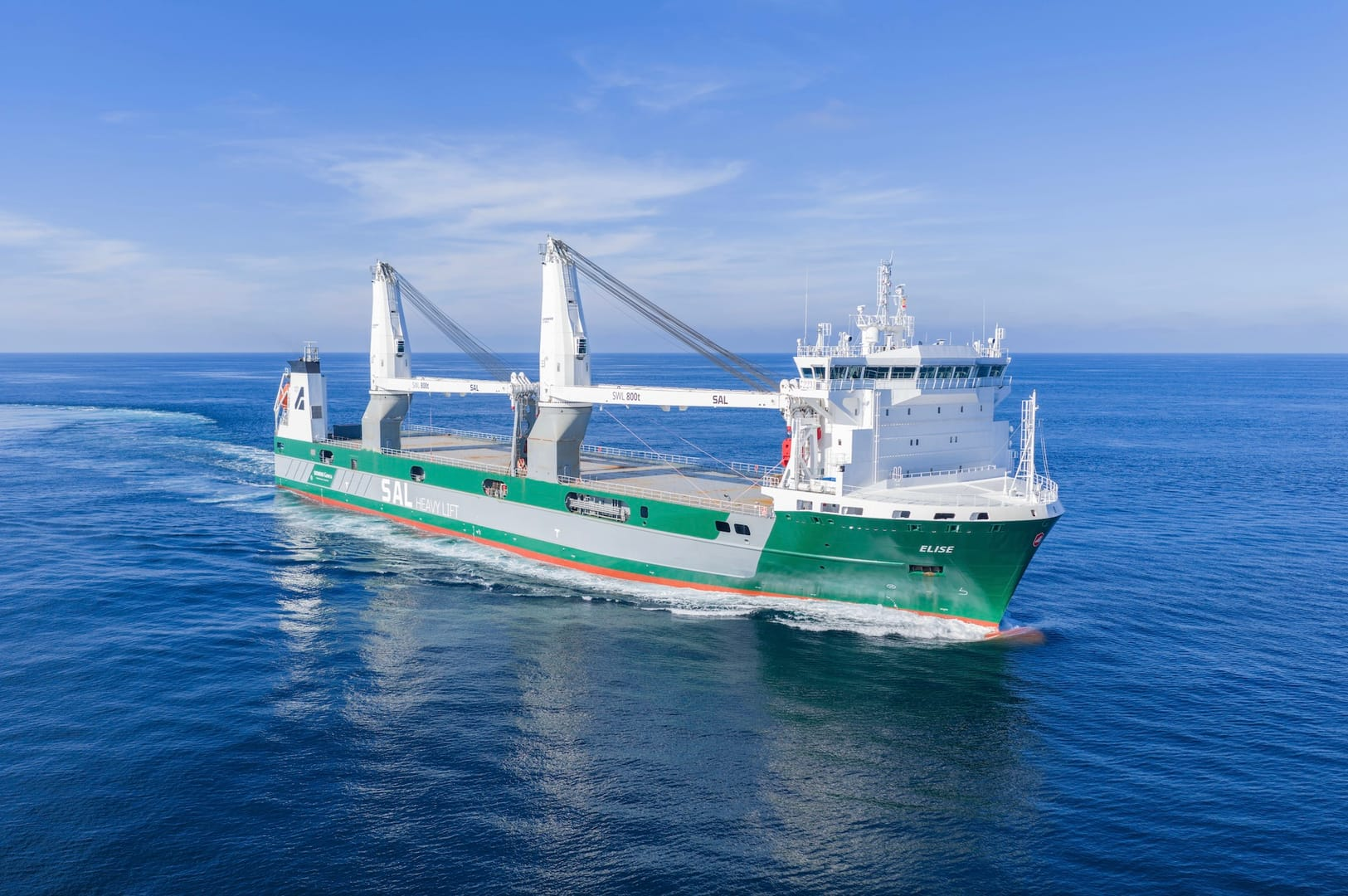
Sperry Marine has completed the first installation of its VisionMaster Integrated Bridge System (IBS) on board Elise, the inaugural vessel of SAL Heavy Lift’s new 14,600-dwt Orca Class. The ship marks the beginning of a five-vessel program that will equip SAL’s next generation of heavy lift carriers with the same advanced navigation suite.
Classed by DNV and built to Ice-Class 1A and Polar Code standards, the Orca Class has been developed to meet the requirements of project cargo transport while minimizing environmental impact. Each ship features an optimized hull shape, two 800-tonne all-electric cranes, hybrid propulsion, and shore-power capability for zero emissions in port. The vessels are also prepared for methanol fuel, providing a path to future zero-emission operation once green e-methanol becomes available.
“The Orca Class represents a new era in heavy lift shipping, combining advanced technology with a strong focus on efficiency and sustainability. These vessels are equipped to establish a new benchmark for safety, precision, and innovation in this highly specialized shipping sector,” said Sebastian Westphal, Managing Director of SAL Heavy Lift.
Developed through close cooperation between SAL Heavy Lift and Sperry Marine, the VisionMaster Integrated Bridge System has been tailored to meet demanding operational and safety standards for long-range and polar navigation. The system on Elise introduces several firsts for bridge integration. Using Virtual Network Computing (VNC) watch modes, navigators can access tools such as the ice radar directly from the conning position. Data from the VisionMaster Net X-Band radar is transmitted to the Rutter Sigma S6 Ice Navigator, improving ice detection capability and situational awareness in challenging conditions. The VNC interface allows the radar display to be operated flexibly from the bridge, contributing to safer and more efficient navigation.
Elise is also the first newbuild to incorporate Sperry Marine’s NAVISTAR satellite compass, ensuring accurate and reliable heading data even at high latitudes, and the first vessel fitted with the complete installation of 27-inch VisionMaster Net Panel PCs. According to Pascal Göllnitz, Product Line Manager – Integrated Bridge Systems at Sperry Marine, the installation demonstrates both the adaptability of the VisionMaster platform and the effectiveness of cooperation between the two companies. He noted that the system design was updated to integrate Orca AI’s camera network into VisionMaster Net at SAL’s request, providing an additional layer of situational awareness.
The bridge configuration also includes SperrySphere voyage-planning software, which combines ease of use with intelligent route optimization, and 7-inch XDi multifunction displays configured with pages specific to SAL’s operational needs. The system is complemented by the new self-adaptive NAVIPILOT 4500N autopilot, which automatically adjusts to vessel dynamics and sea conditions to reduce bridge workload and improve fuel efficiency.
Göllnitz added that the project reflects close coordination between Sperry Marine’s engineering and support teams and SAL’s shipbuilding partners. The Elise was constructed through a two-yard process that began at Wuhu Shipyard and was completed in Weihai. Four additional Orca Class ships will follow, each equipped with Sperry Marine’s VisionMaster Integrated Bridge System.