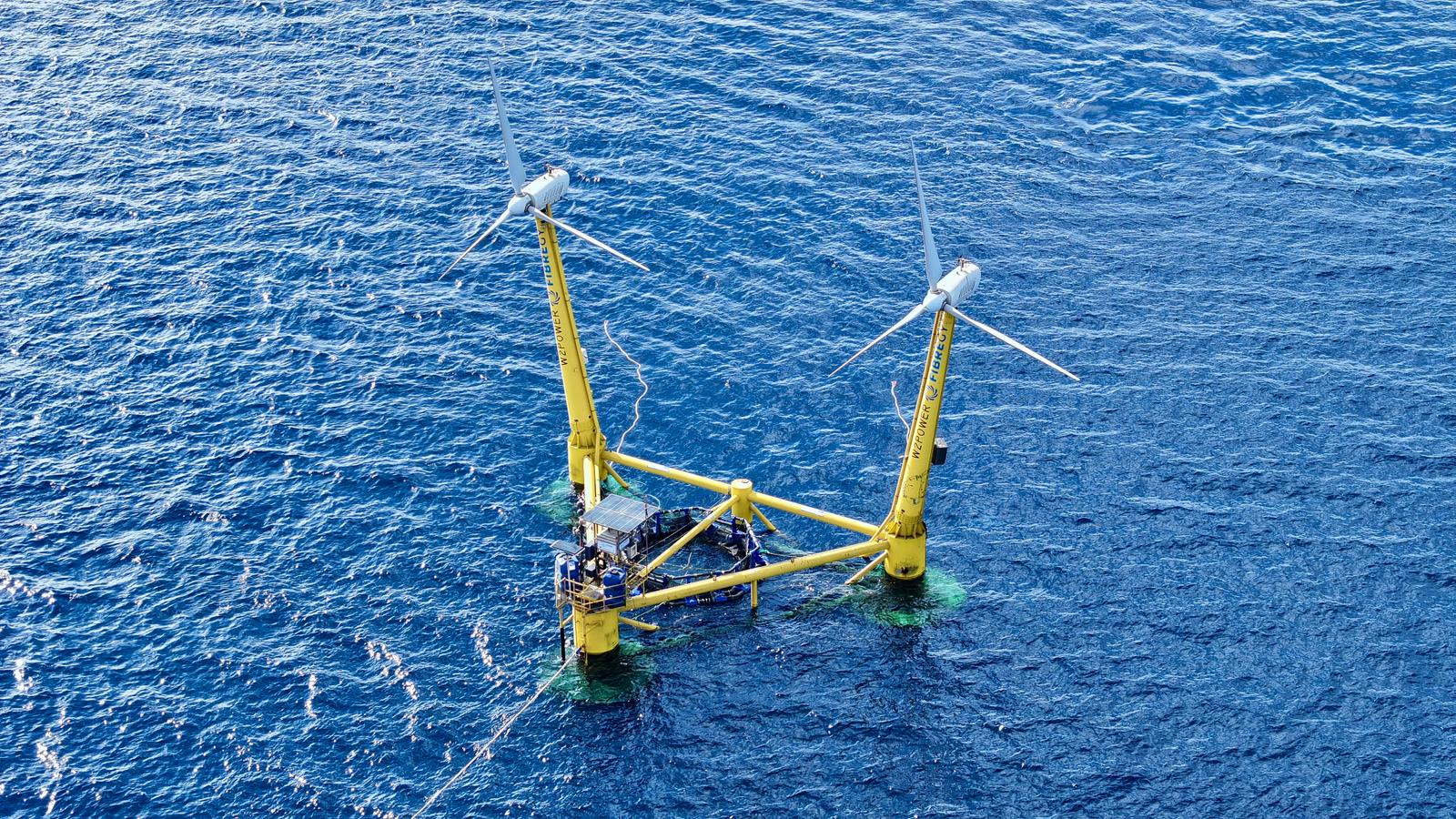
A prototype floating platform combining offshore wind energy production with aquaculture has been installed at a Spanish test site, marking a major step for multi-use marine infrastructure.
The initiative is part of the AquaWind project, which seeks to combine a floating wind turbine platform (W2Power) with aquaculture cages and supporting systems to demonstrate technical, economic and environmental feasibility of co-located uses of marine space.
The prototype platform was towed offshore and installed at the test site managed by PLOCAN (the Oceanic Platform of the Canary Islands) in the Atlantic region. Onboard is the W2Power floating dual-turbine wind foundation (developed by Spanish company EnerOcean) retrofitted to accommodate an aquaculture cage system engineered by academic and industry partners including ULPGC (University of Las Palmas de Gran Canaria).
The aquaculture component features novel materials for the nets, remote-digital control systems, and is designed to test growth and health of model fish species alongside energy production. According to project documentation:
“The aquaculture component … can be used for different types of fish, as well as for other marine organisms, such as seaweed and shellfish.”
The platform’s deployment is seen as a significant milestone because it is a first in Europe to combine live aquaculture with a floating wind structure in the Atlantic basin. By integrating these activities, the project aims to optimise marine space, reduce costs by sharing infrastructure, and open up new business models for coastal economies.
From a regulatory and operational perspective, the AquaWind consortia are also working on frameworks, data gathering and monitoring systems to assess not only energy and aquaculture performance, but also environmental impacts, social acceptance and business viability.
The AquaWind project is co-funded by the European Union under Grant Agreement No. 101077600. Key consortium partners include ACIISI, ULPGC, EnerOcean, CANEXMAR, PLOCAN, Consulta Europa, the Canary Islands Maritime Cluster, WAVEC, and INNOSEA.