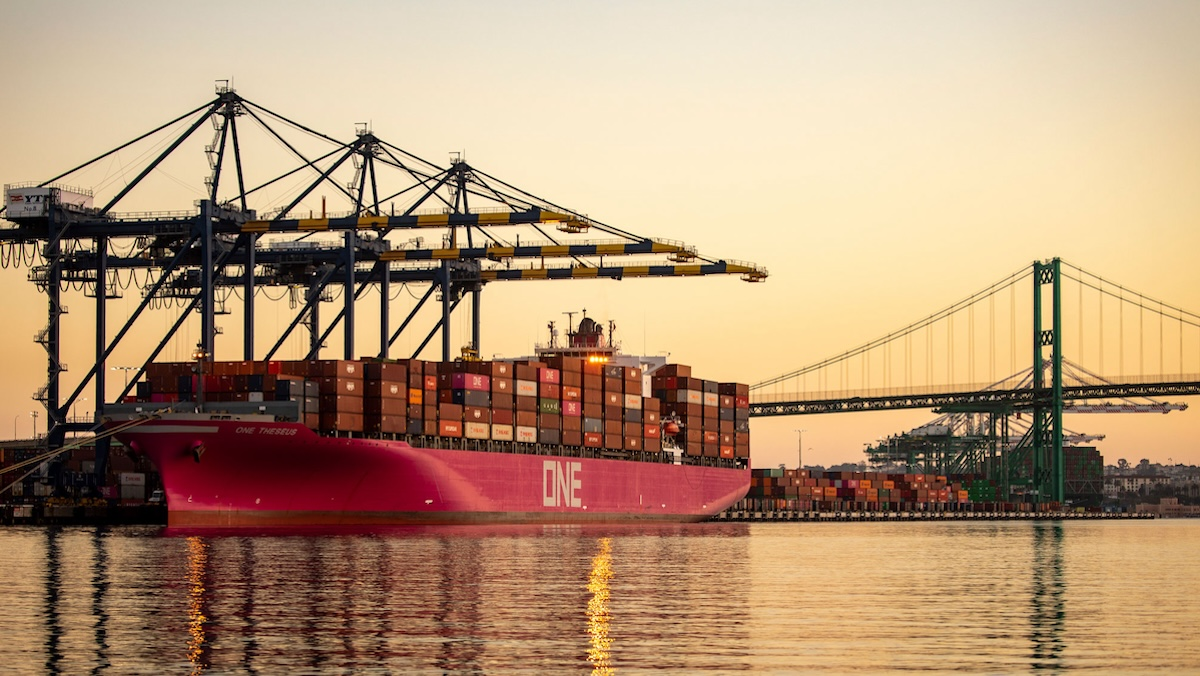
The newly enforced USTR (United States Trade Representative) fees, which came into effect on 14 October 2025, have had a dramatic impact: in the week spanning 12–18 October, the Port of Los Angeles recorded only one vessel built in China calling at the terminal.
Under normal conditions, around 20 % of vessels visiting U.S. West Coast ports are Chinese-built or operated. But with the new regime in place, that share dropped sharply. The Port of LA’s Executive Director, Gene Seroka, noted that while approximately 22 vessels were scheduled to call during the week, only one of them was a Chinese-built ship — representing just 4.5 % of that week’s calls, far below typical levels.
The fee structure for Chinese‐owned or operated vessels now starts at US$50 per net tonnage (NT), rising over time to reach US$140 per NT by 2028. For Chinese‐built ships (regardless of operator), the entry fee is lower: beginning at US$18 per NT (or US$120 per container) and escalating to US$33 per NT (or US$250 per container) by 2028. Each ship will be subject to the fee up to a maximum of five times per year.
The Port of LA, which had been experiencing record volumes prior to the implementation of these tariffs, is now seeing early signs of disruption. Though still fully operational, the port is navigating the fallout from the intensifying U.S.–China trade war, compounded by a lingering partial federal government shutdown.
In September, the port handled 883,053 TEU, marking a 7.5 % year-on-year decline, though Q3 overall was still its best quarter to date at 2.9 million TEU. Import volumes continue to outpace U.S. exports by a ratio of roughly 4:1, highlighting the ongoing structural trade imbalance.
Looking ahead, the Port Optimizer Control Tower forecasts a steep drop in vessel calls and container volume in late October. Between 26 October and 1 November, only 15 vessels are expected to arrive carrying 76,129 TEU — down from 22 vessels and around 115,000 TEU in the preceding weeks.
Gene Seroka expressed concern over the broader implications, citing volatile trade conditions emanating from Washington. He remarked, “It’s been a whirlwind, and calm winds are far from guaranteed.”