South Korea’s flagship carrier HMM has unveiled its largest vessel order in seven years — a ₩3.45 trillion (approximately US$2.5 billion) investment aimed at expanding capacity and expediting its transition toward eco-friendly shipping. The move marks a strategic response to both the stabilization of global freight markets and the tightening of international carbon regulations.
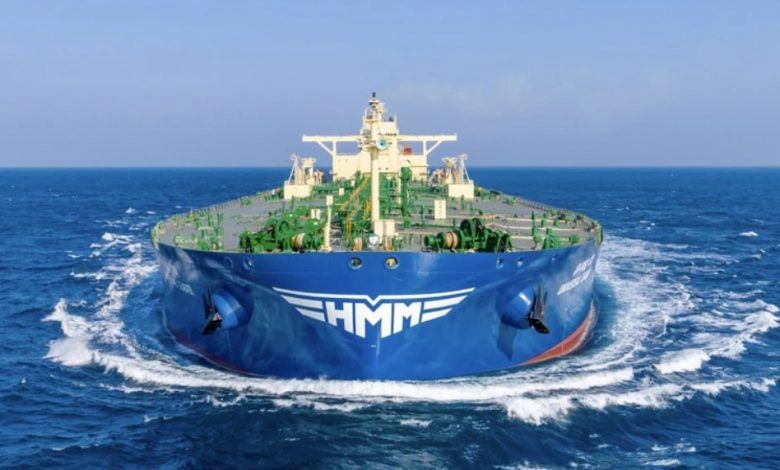
According to industry sources, HMM signed contracts on October 16 with HD Hyundai Heavy Industries and Hanwha Ocean to construct twelve 13,000 TEU LNG dual-fuel container vessels. Of these, eight will be built by HD Hyundai Heavy Industries and four by Hanwha Ocean, with a total contract value of ₩3.05 trillion. In addition, HMM has placed an order for two very large crude carriers (VLCCs) with HD Hyundai Heavy Industries worth approximately ₩400 billion, bringing the total investment to ₩3.45 trillion.
At the core of this initiative is HMM’s ambition to accelerate the decarbonization of its fleet. All twelve container vessels will be powered primarily by liquefied natural gas (LNG), aligning with the International Maritime Organization (IMO) and European Union’s tightening carbon emission standards. The company’s order follows last year’s contract for nine methanol-powered ships, completing what it calls a “dual-fuel fleet” architecture for future operations.
From a technical standpoint, the 13,000 TEU vessels strike a balance between efficiency and operational agility. Unlike mega-container ships exceeding 20,000 TEUs, these mid-sized vessels consume less fuel and offer greater route flexibility—making them particularly competitive on regional and mid-range trade lanes where demand has been rising globally.
A senior maritime analyst commented, “HMM’s introduction of LNG-powered 13,000 TEU ships represents a pivotal shift from an ultra-large ship portfolio toward a more efficient, environmentally aligned mid-sized segment.”
The ripple effects extend beyond shipping to the shipbuilding industry. South Korean shipyards, already world leaders in constructing LNG-fueled large vessels, stand to gain high-value orders that strengthen both domestic employment and industrial competitiveness. The balanced allocation of work—large ships to Korean yards and medium-sized vessels to Chinese ones—illustrates HMM’s focus on cost efficiency and strategic diversification.
Industry observers note that the initiative reflects HMM’s long-term strategic vision rather than a short-term profit play. By synchronizing vessel type, investment timing, and low-carbon technology, HMM is positioning itself to lead the next phase of sustainable maritime logistics.
An HMM spokesperson stated, “This large-scale investment will allow us to expand capacity and reinforce our environmental competitiveness in an increasingly demanding global shipping landscape. Guided by our 2030 mid- to long-term strategy, HMM will continue to invest in sustainable growth and fleet modernization.”