The global shipping industry is at a turning point. Mounting regulatory pressure, tightening carbon targets, and growing expectations from cargo owners are driving a gradual but decisive shift away from conventional marine fuels. In their place, a new generation of vessels designed for ammonia, methanol, ethanol, and hydrogen is emerging. These fuels are no longer limited to lab tests or pilot projects; industry data shows they are increasingly represented in newbuilding and retrofit orders.
Regulatory Pressure and Climate Goals
The International Maritime Organization (IMO) adopted a revised greenhouse gas (GHG) strategy in 2023, aligning the sector with net-zero emissions “by or around 2050.” Milestones for 2030 and 2040 include targets for accelerated uptake of zero- and near-zero fuels.
Meanwhile, the European Union has brought shipping into its Emissions Trading System (ETS), with carbon cost exposure phased in (40% in 2025, 70% in 2026), reaching 100% from 2027 onwards. According to industry analysts, these measures are sending a clear signal that low- and zero-carbon vessels will be essential to remain competitive.
Emerging Fuel Technologies
The shipping industry’s fuel transition increasingly focuses on four candidates: ammonia, methanol, ethanol, and hydrogen.
- Ammonia generates no CO₂ at the point of combustion, but its toxicity and corrosiveness require stringent safety protocols. Analysts emphasize that only “green ammonia” — produced from renewable energy — can deliver real climate benefits.
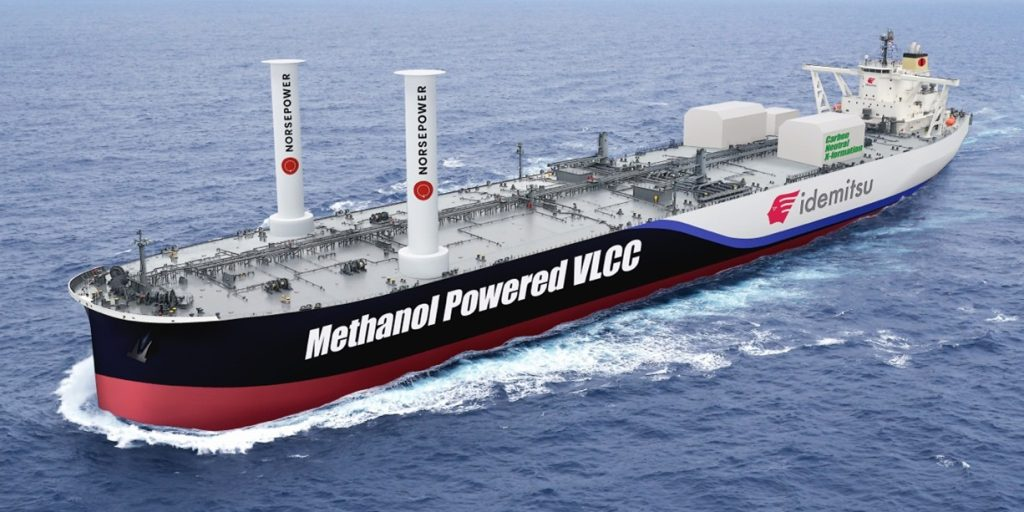
- Methanol has become the most popular alternative fuel in newbuilding orders, with more than 130 vessels ordered in 2023. It offers simpler storage and handling compared to hydrogen or ammonia, and can be produced renewably from biomass or CO₂. However, industry reports note that a significant share of orders involve retrofit projects, and fossil-based methanol still emits CO₂.
- Ethanol, particularly bio-ethanol, provides reductions in SOx and NOx and is compatible with some existing fuel supply chains. However, its hygroscopic behavior, material compatibility issues, and fire safety risks remain technical hurdles.
- Hydrogen is often described as the most promising long-term fuel. It can power both combustion engines and fuel cells with zero CO₂ emissions. Yet, according to classification societies, hydrogen’s cryogenic storage at –253°C or high-pressure compression, as well as flammability and infrastructure gaps, limit near-term scalability.
Shipbuilders and engine makers including Wärtsilä, MAN Energy Solutions, and Hyundai Heavy Industries are prioritizing dual-fuel and fuel-flexible designs, enabling gradual adoption as fuel infrastructure develops.
Market Momentum and Case Studies
Industry data from DNV’s Alternative Fuels Insight platform indicates that orders for alternative-fuel-capable vessels reached nearly 300 in 2023, up about 8% from the previous year. LNG remains significant, but methanol surged ahead with 138 orders, slightly outpacing LNG’s 130. Ammonia accounted for 11 orders — among the first of its kind — while reports suggest five hydrogen-capable vessels were ordered.
Notable examples include:
- Wärtsilä and Eidesvik Offshore: converting the PSV Viking Energy to ammonia fuel, with operations planned in 2026.
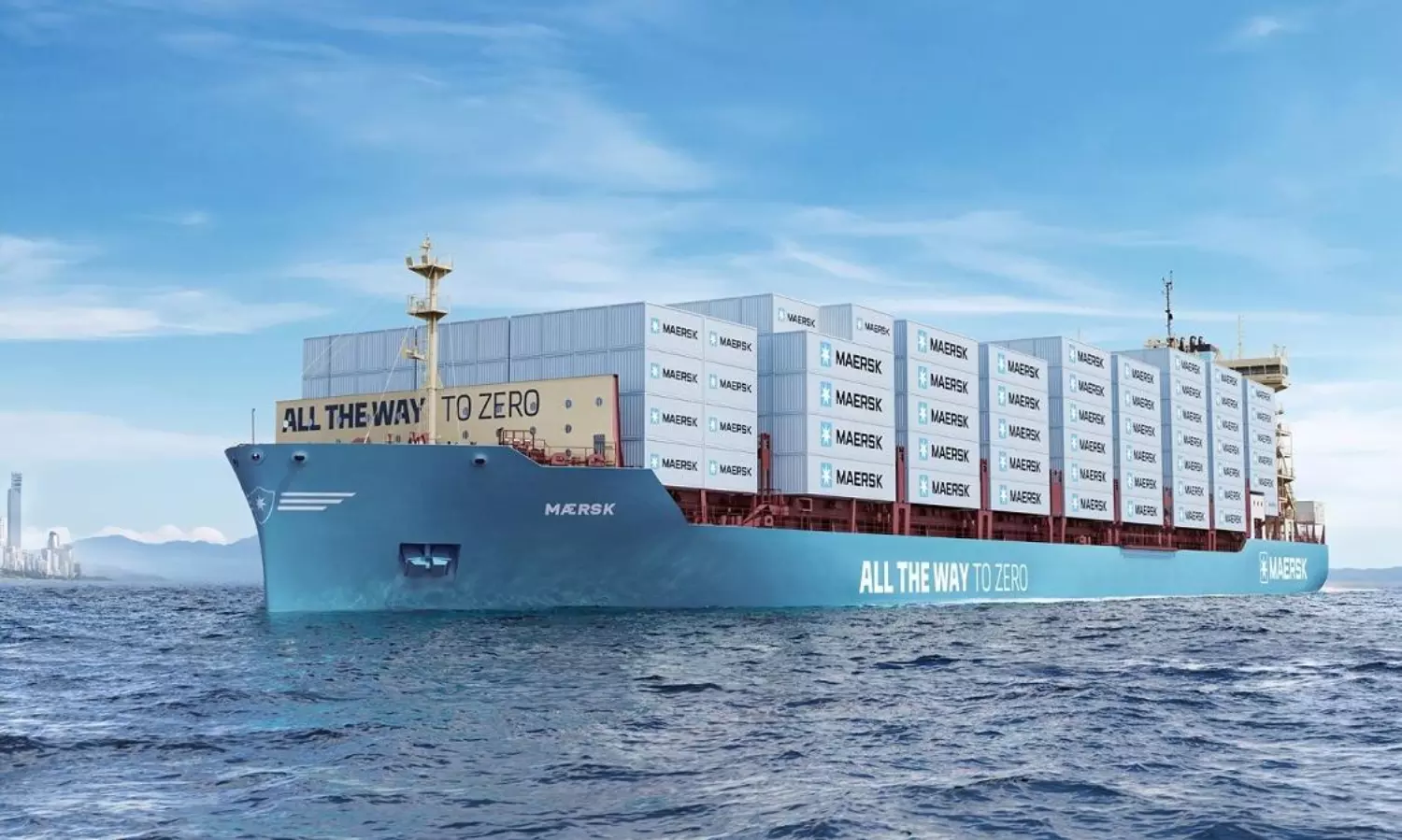
- Maersk: leading methanol adoption with its Laura Maersk, the first container vessel capable of operating on methanol, and a series of additional newbuilds on order.
- BHP and COSCO: developing two ammonia dual-fuel Newcastlemax bulkers, expected in 2028, with the company stating these ships could cut CO₂ emissions by 50–95% depending on fuel supply.
- Fortescue’s Green Pioneer: demonstrating ammonia-diesel operation, though reports differ on whether ammonia cracking technology or blended dual-fuel was applied.
- Norled’s MF Hydra: recognized as the first liquid hydrogen-powered ferry, currently operating in Norway.
- Kawasaki Heavy Industries’ Suiso Frontier: completed the world’s first voyage transporting liquefied hydrogen.
These projects suggest that while methanol and LNG are leading near-term adoption, ammonia, ethanol, and hydrogen are advancing as medium- and long-term solutions.
Infrastructure, Safety, and Environmental Trade-offs
Each fuel brings unique challenges. Ammonia’s toxicity, methanol and ethanol’s flammability and material compatibility issues, and hydrogen’s cryogenic storage all require updated safety standards. The IMO has already issued interim guidelines for ammonia-fueled ships, while hydrogen and alcohol-fuel standards are still under development.
Infrastructure also lags. Methanol bunkering is beginning to expand in major ports, but global availability of ammonia, ethanol, and hydrogen remains very limited. According to industry forecasts, large-scale adoption will depend heavily on new bunkering investments.
Environmental trade-offs are significant. Ammonia eliminates CO₂ but can emit NOx, N₂O, and unburned ammonia slip. Methanol and ethanol reduce SOx and NOx but still emit CO₂ unless produced renewably. Hydrogen is zero-carbon at the point of use, but “grey hydrogen” produced from fossil fuels delivers little climate benefit.
Outlook
The transition to alternative marine fuels is not speculative — it is happening now. Methanol appears to be the frontrunner for near-term adoption, while ammonia, ethanol, and hydrogen are expected to grow as regulatory clarity, infrastructure, and green production scale up.
For shipyards, the competitive edge lies in offering fuel-flexible, future-ready designs. For shipowners, early adoption can reduce compliance risks and appeal to sustainability-focused cargo owners and financiers.
The 2020s will likely be remembered as the decade when shipping’s fuel transition accelerated from pilot projects to mainstream adoption. By the 2030s, vessels powered by ammonia, methanol, ethanol, and hydrogen could represent a meaningful portion of the global fleet — provided that infrastructure, safety standards, and green fuel production develop in parallel.
Sources: DNV Alternative Fuels Insight (2023), IMO GHG Strategy, EU ETS, Reuters, Ammonia Energy Association, Maersk announcements, Norled, Kawasaki Heavy Industries, industry classification society guidelines.